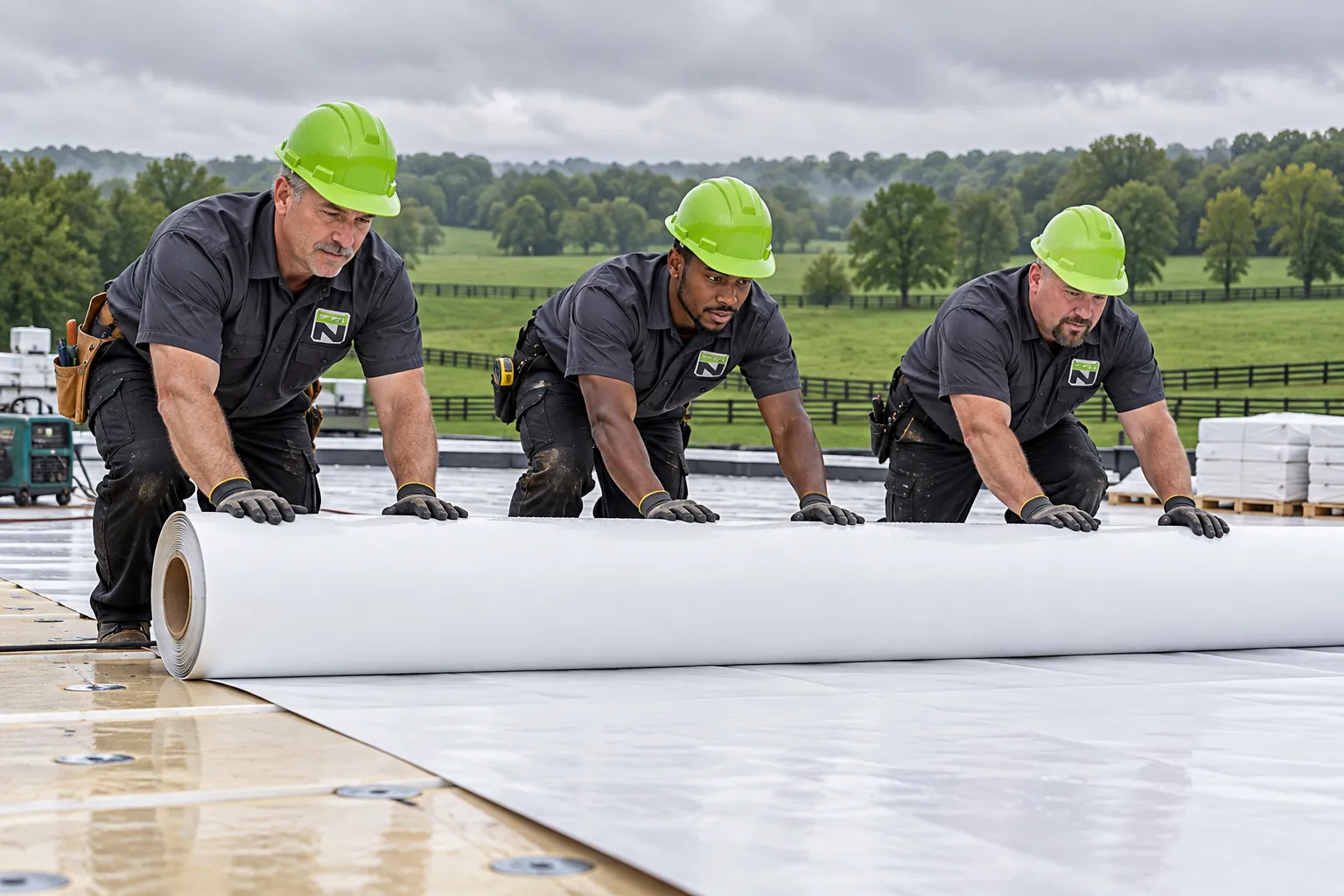
TPO on Warehouse Roofs
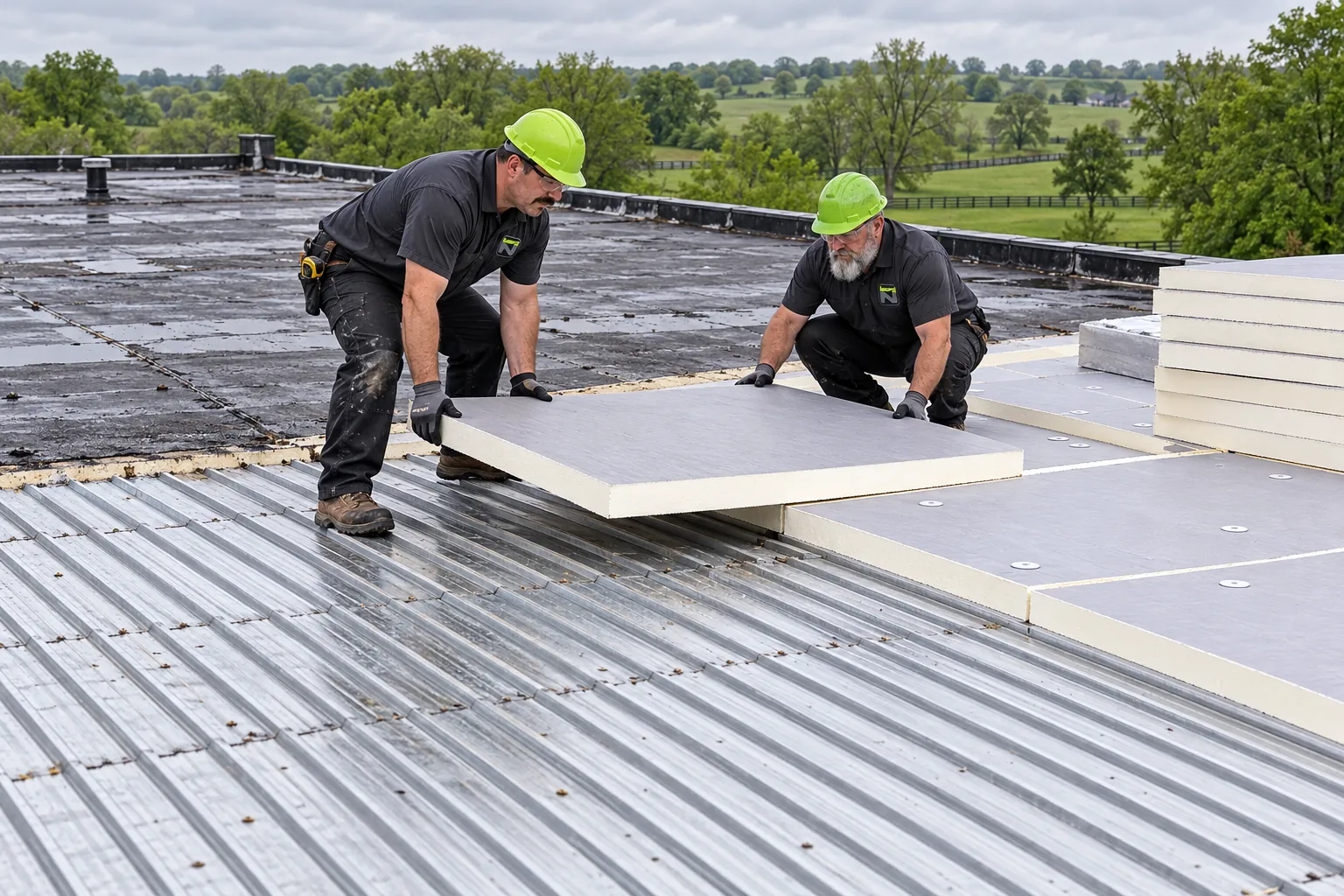
White heat-welded TPO over tapered insulation, with walkway pads where techs cross to dusty rooftop units.
TPO roofing details
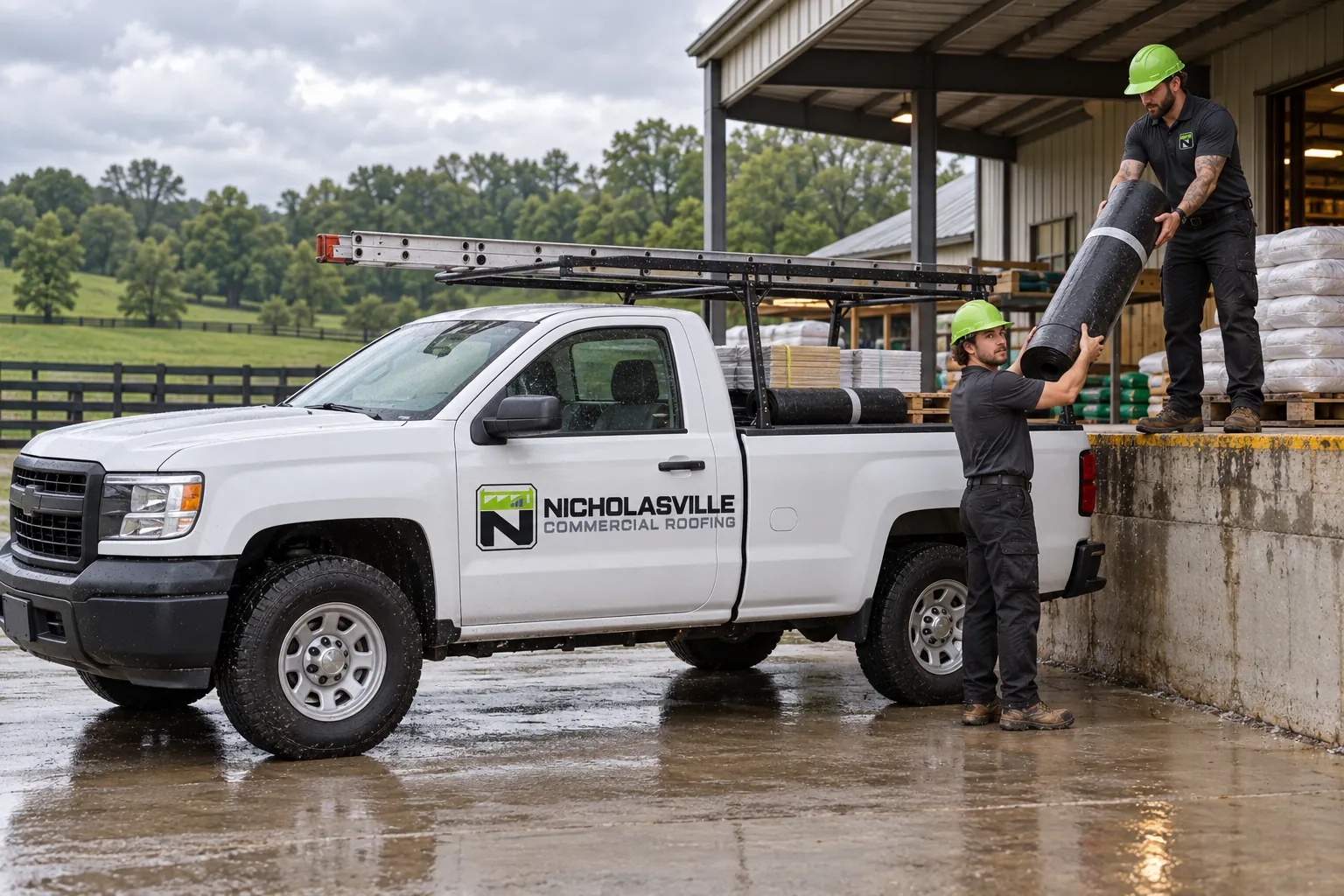
Commercial Roofing · Junction City, KY
As a Junction City commercial roofing contractor, we replace and repair roofs on rail-side shops and warehouses, with cranes, chutes, and dumpsters kept clear of the tracks.
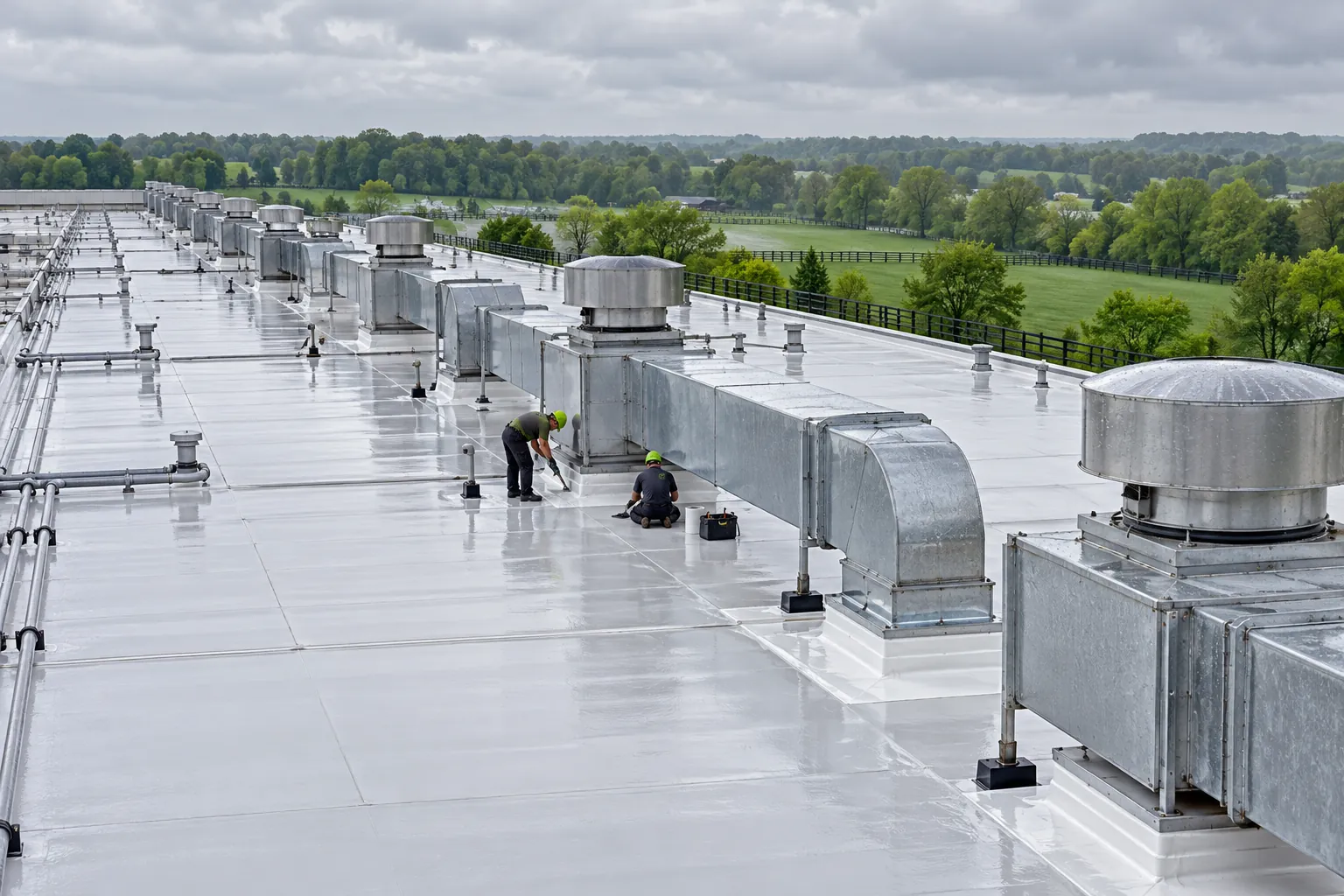
A Junction City commercial roofing contractor plans around trains. The City of Junction City's history credits the Louisville and Nashville Railroad and the Cincinnati Railroad with founding and naming the town, and buildings near active tracks still shape how roof work is staged.
Crane swings and debris chutes stay out of the track right-of-way, the railroad gets asked about any rules for work beside its line, and permits go to Boyle County Building Inspection, the same office as Danville.
Rail-side roofs pick up their own kind of wear. These five areas show it first.
Grit and soot from passing trains settle in gutters and pack downspouts, so water backs up under the roof edge.
Fine grit wears the paint on edge metal and coping, and once bare steel shows, rust follows at the fasteners.
Strainers collect the same debris as the gutters, leaving drains slow and ponds around them after rain.
Dark grime on a white membrane dulls its reflective surface and hides small punctures until they leak.
Units near the tracks pull in dust, and curb flashing takes the vibration of passing trains through the structure.
What a replacement fixes on a building that shares a fence line with the railroad.
Larger gutters and downspouts with guards handle the grit load so roof water reaches the ground.
New edge metal and coping start with intact paint, holding off rust where grit wore the old finish through.
A new sheet brings back the reflective roof surface that years of soot dulled.
Drain bodies reset with new strainers end the ponds that formed around the clogged ones.
Cranes, chutes, and dumpsters placed away from the right-of-way keep roof work and rail traffic apart.
Roof systems for Junction City shops and warehouses, chosen with rail-side wear in mind.
White heat-welded TPO over tapered insulation, with walkway pads where techs cross to dusty rooftop units.
TPO roofing details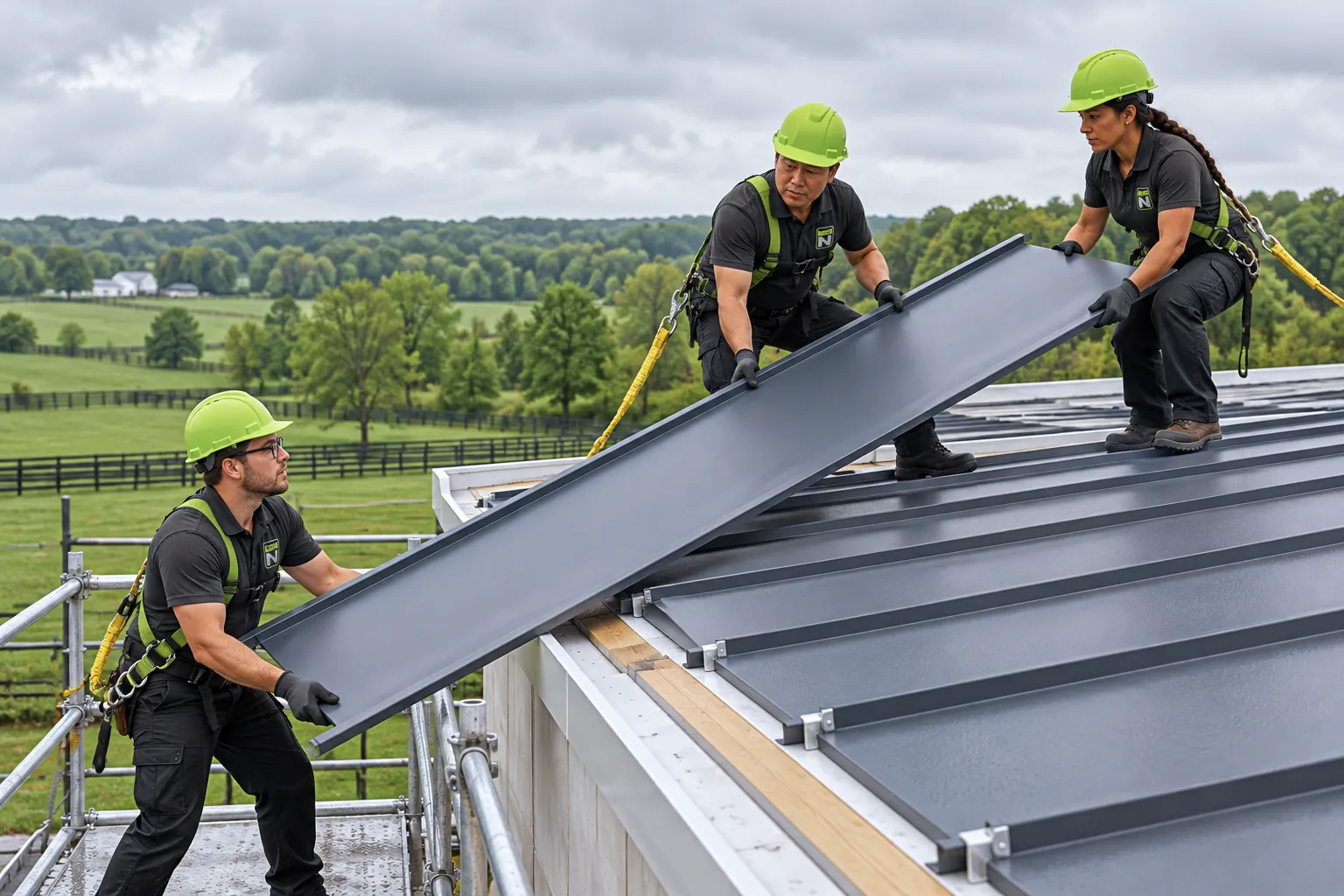
Standing seam or R-panel with trim and gutters sized for grit, in a PVDF paint finish.
Commercial metal roofing details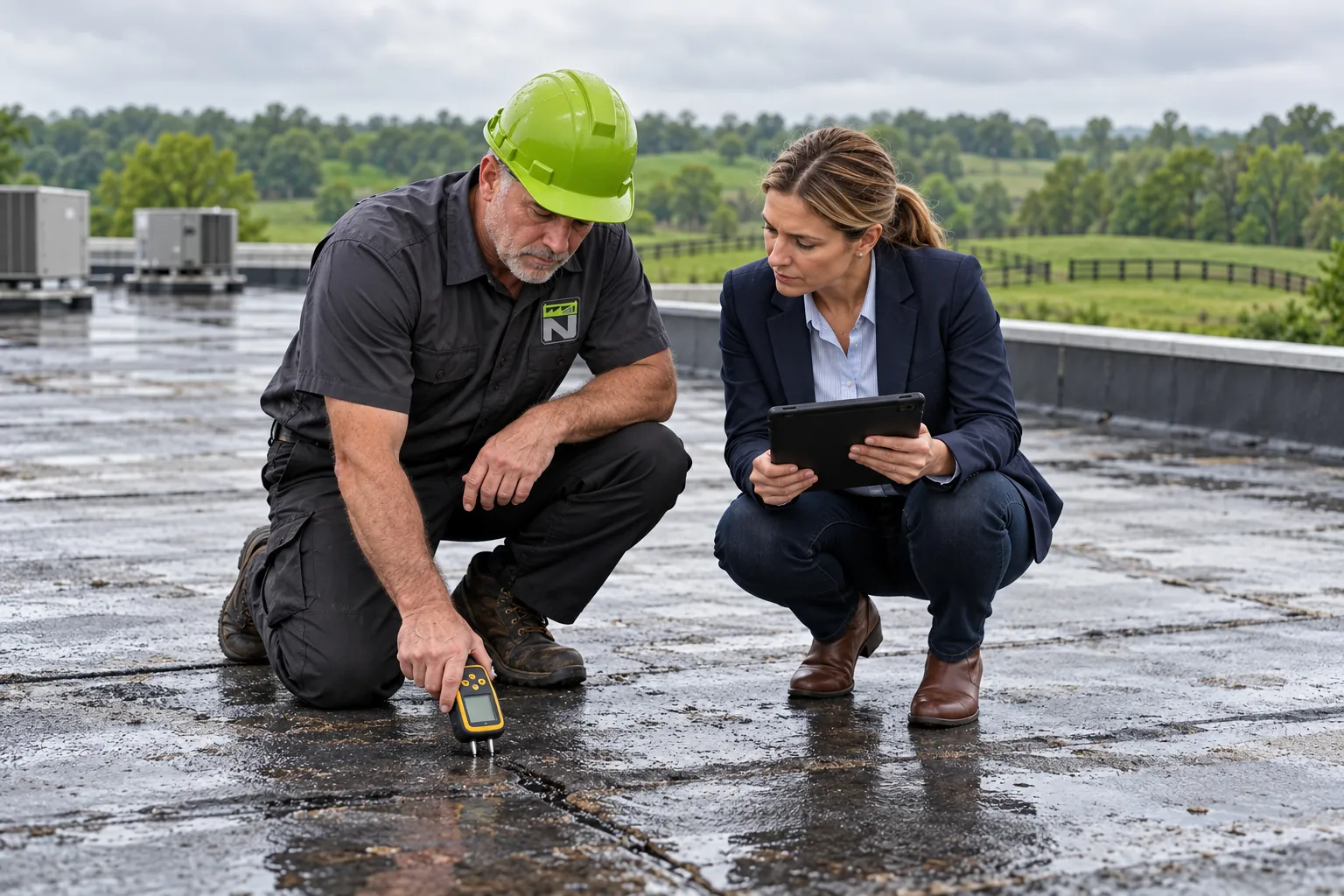
Packed gutters, rusted edge metal, and loose coping get cleaned, replaced, or refastened on roofs with years left.
Commercial roof repair details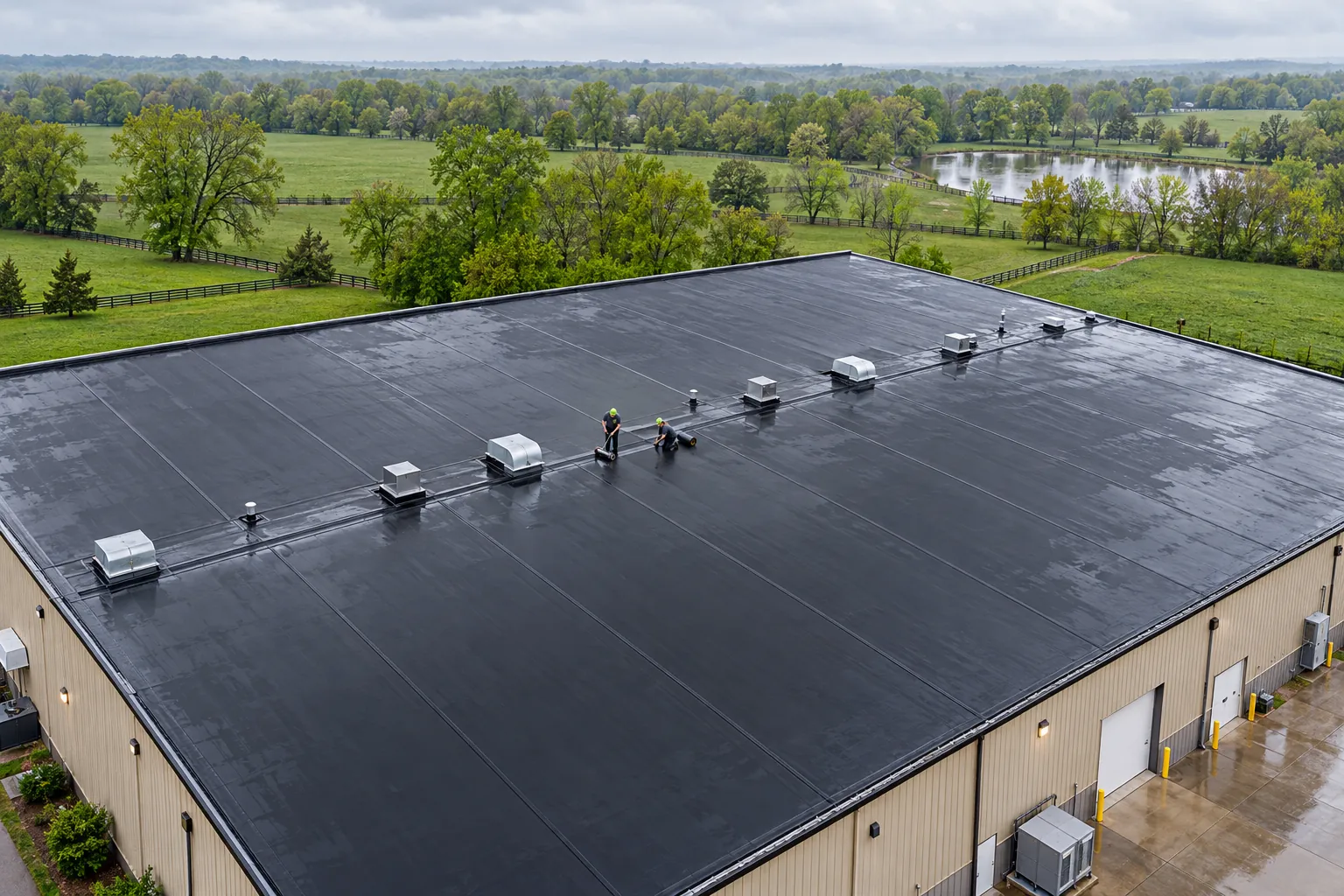
Rubber roofs on older rail-side buildings replaced with matching EPDM and new edge flashing.
EPDM roofing detailsClogged gutters push water under the roof edge. Call us and we will clear them, check the edge metal, and look at the drains.
Five steps for replacing a roof beside active tracks.
We walk the roof, check gutters, drains, and edge metal for grit damage, take core cuts, and map where the building sits relative to the tracks.
The track side of the lot is marked on the sketch.
Crane position for roof lifts, swing radius, chutes, and dumpsters are set away from the right-of-way, and the railroad is asked about rules for work beside its line.
Deliveries come in from the street side.
The commercial roof application goes to Boyle County Building Inspection, and the City of Junction City is asked about any local business filing.
It is the same county office as Danville.
Each roof section is torn off and dried in by evening, and debris goes down the chute into dumpsters on the far side of the lot.
Chutes are covered to keep dust down.
New gutters, edge metal, and drains are checked, grit is swept from the roof, and a final walk covers every detail facing the tracks.
Photos go with the closeout plan.
Is your building outside Junction City? We cover these towns too; anywhere else, call us or send us a message.
Staging, first. Crane swings and debris chutes stay clear of the track right-of-way, the railroad gets asked about any rules for work beside its line, and gutters and edge metal get checked for soot and grit from passing trains. Permits go to Boyle County Building Inspection, the same office as Danville.
On the side of the building away from the tracks, with its swing radius kept out of the right-of-way. Material lifts are planned around that limit, and dumpsters and chutes go on the same far side of the lot.
Soot and grit settle in gutters, in strainers, and on the membrane. Packed gutters back water under the roof edge, clogged strainers leave ponds, worn paint lets edge metal rust, and a darkened white roof loses its reflective surface. Regular cleaning of gutters and strainers keeps the drainage working.
Boyle County Building Inspection, the same office that handles Danville, takes commercial roof applications for Junction City buildings. Bring the roof plan, system data sheets, and edge and drain details, and ask the City of Junction City about any local business filing as well.
The systems are the same, with a few choices tuned to grit: walkway pads where techs cross to dusty units, larger gutters with guards, and edge metal in a durable paint finish. The bigger difference is staging, which stays clear of the tracks.
Tell us where the building sits relative to the tracks. We start with a roof walk, a staging sketch, and the permit list.
Or call (270) 249-6474
Want a call back about your roof?
Leave a name and number, or call (270) 249-6474 now.