Exhaust Areas
Resistant Membrane Zones
PVC or another chemical-rated sheet goes around grease and process vents, welded into the main field. The vent discharge is checked against the maker's resistance chart first.

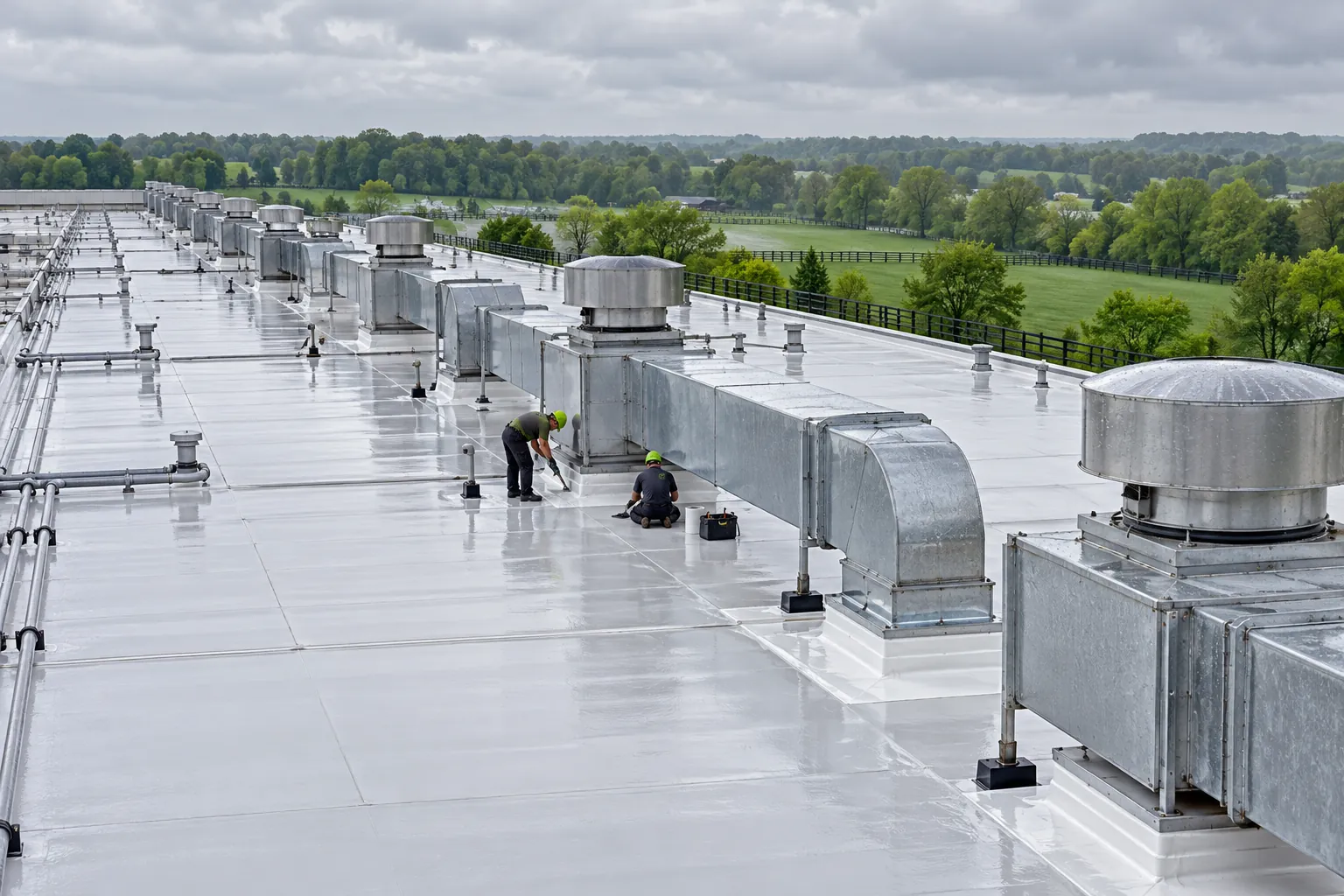
Industrial Roofing · Nicholasville, KY
As a Nicholasville industrial roofing contractor, we replace and repair plant and warehouse roofs in sections, around exhaust fans, heavy units, and the work underneath.
As a Nicholasville industrial roofing contractor, we sort a plant roof by what lands on it before choosing membrane for each zone.
Mixing membranes on one roof is common: a resistant sheet around the exhaust zone, tied into the main field.
Plant roofs carry more penetrations per square foot, so wear concentrates in these five zones.
Grease, heat, and process residue land on the membrane around each fan and soften or stain standard sheets. Hot stacks need metal heat shields.
Large curbs, sleepers, and pipe supports concentrate weight on the deck and leave flashing working against vibration all day.
Daily traffic to equipment wears visible paths into the sheet. Pads along those routes take the wear the membrane would otherwise carry.
Spans between drains run long on plant roofs, and deck deflection between joists adds low spots where water stands.
Roof hatches with no guardrail and translucent skylight panels with no screen put workers at risk and invite punctures around their frames.
Four pieces a plant roof replacement combines, each sized to the building's equipment and exposure.
Exhaust Areas
PVC or another chemical-rated sheet goes around grease and process vents, welded into the main field. The vent discharge is checked against the maker's resistance chart first.
Ponding Roofs
Boards thicken away from drains, and crickets push water around curbs and between drains on large spans.
Service Paths
Pads mark and protect routes to RTUs, and equipment platforms spread loads under heavy process units.
Fall Protection
Guardrails at the roof access point and screens over translucent panels get reset on the new roof.
What changes for the plant once the old roof is replaced in sections.
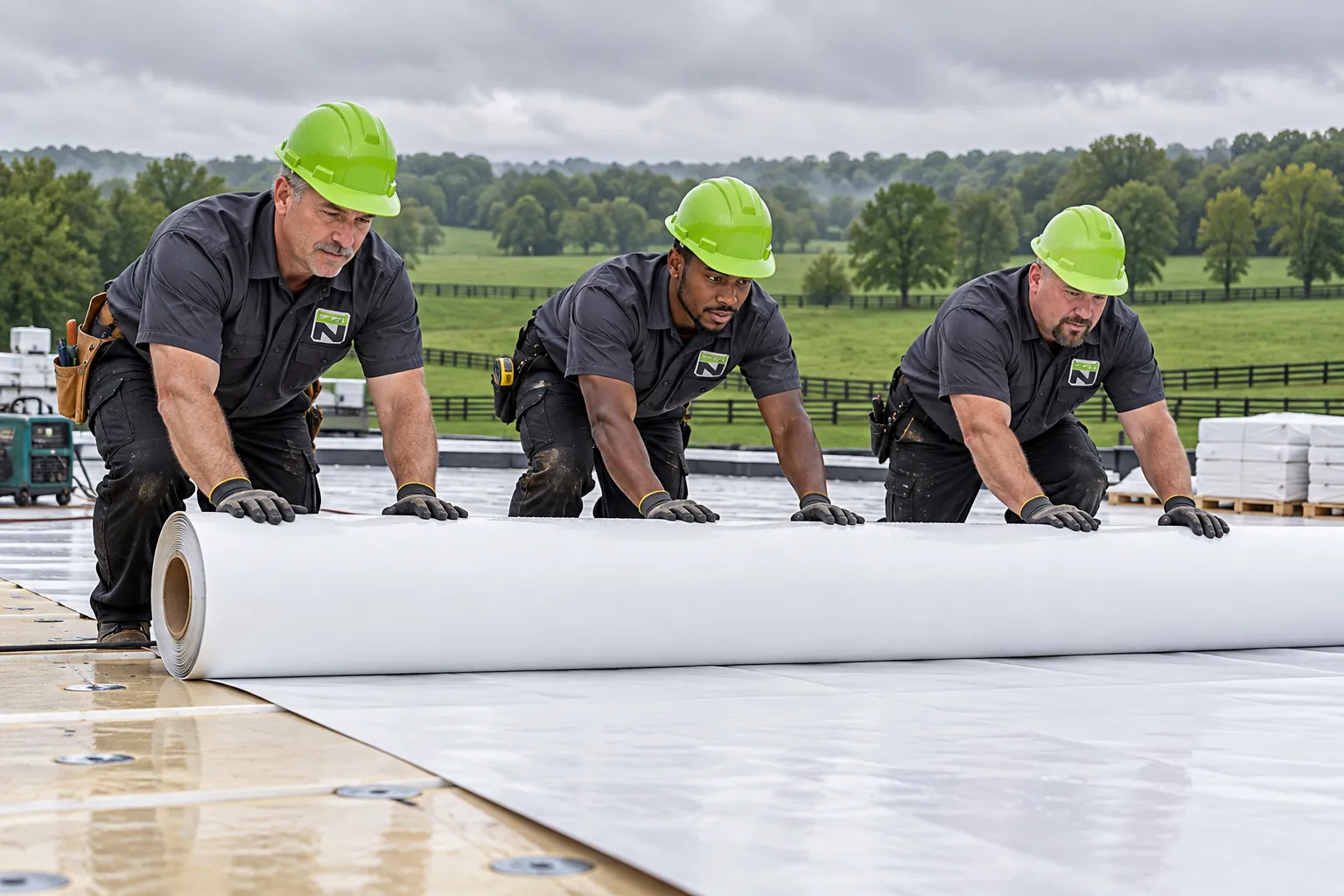
A resistant zone around grease and process fans stops the softening and staining that wore out the old sheet near them.
Tapered layouts drawn for the plant's drain spacing clear the mid-span ponds that sat through every rain.
Walkway pads give service techs a marked route and keep their boots off the field membrane.
Rails and screens reset on the new roof protect the people who cross it every day.
Section-by-section tear-off, dried in each evening, keeps lines running under the roof through the job.
Soft, stained membrane around a fan is where a plant roof opens up first. Call and we will check the sheet against the exhaust before it leaks.
Five phases built around a plant that stays in production.
We walk the roof with the plant manager, log every fan, stack, unit, and hatch, and take core cuts to map wet insulation across the spans.
Each exhaust source is noted for the resistance check.
Daily tear-off limits for each roof section, shutdown windows for fans and RTUs, dust-sensitive areas, and dumpster spots away from loading docks are set with the plant manager.
Shift changes and deliveries go on the same schedule.
Areas under open deck get covered against dust and dropping fasteners, especially over food or clean production zones.
Protection goes up before each section opens.
Each section is torn off, deck is repaired, tapered boards and membrane go down, and temporary seals close the edge before the crew leaves.
Resistant zones are welded in as their section closes.
Walkway pads, hatch guardrails, skylight screens, and pipe supports go back on the new roof, with added pads where the old sheet showed wear paths.
A final walk with the plant manager closes out the job.
Work that often shares a lot with a plant roof.
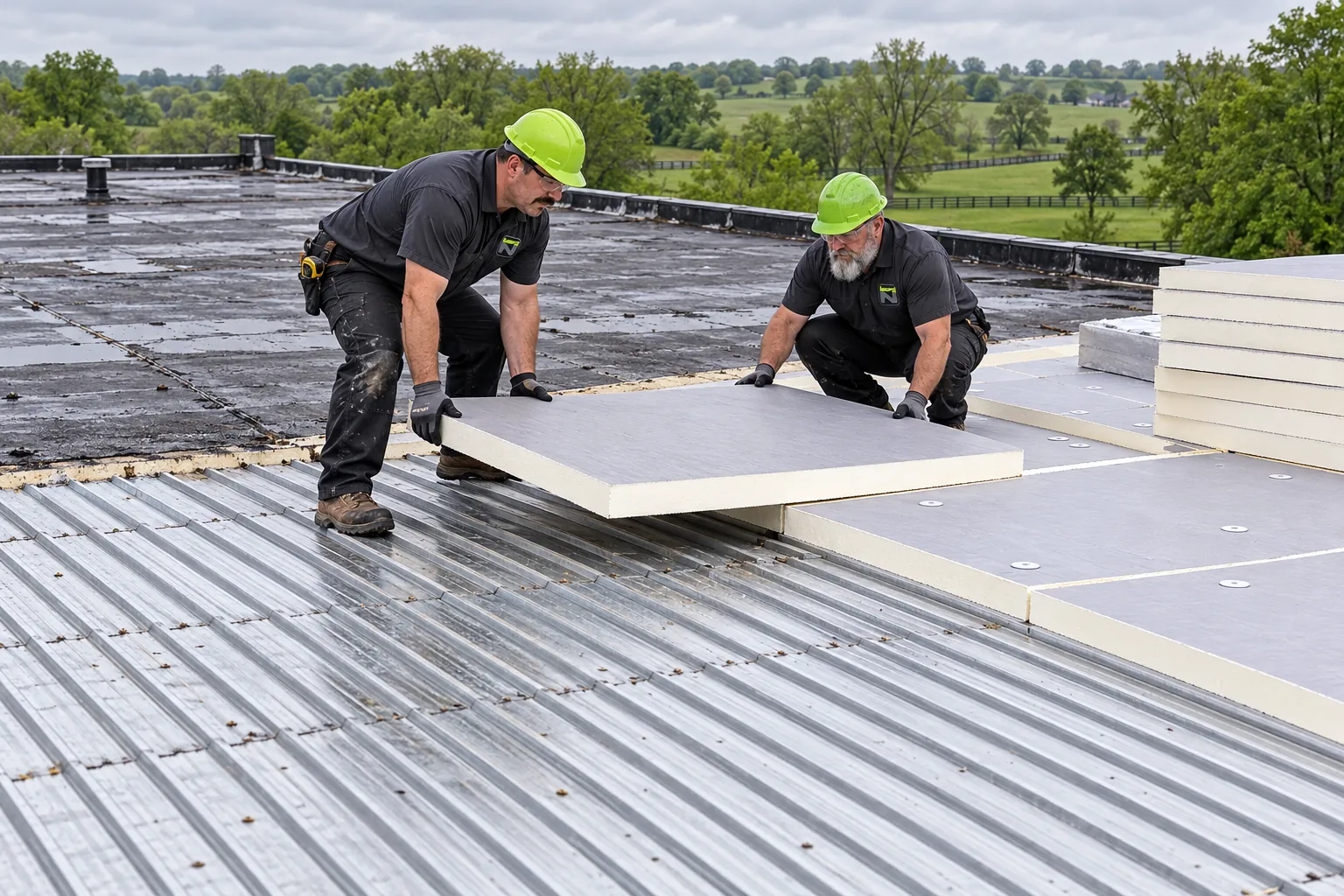
Tapered replacements for warehouse roofs that pond between drains.
Flat roofing in Nicholasville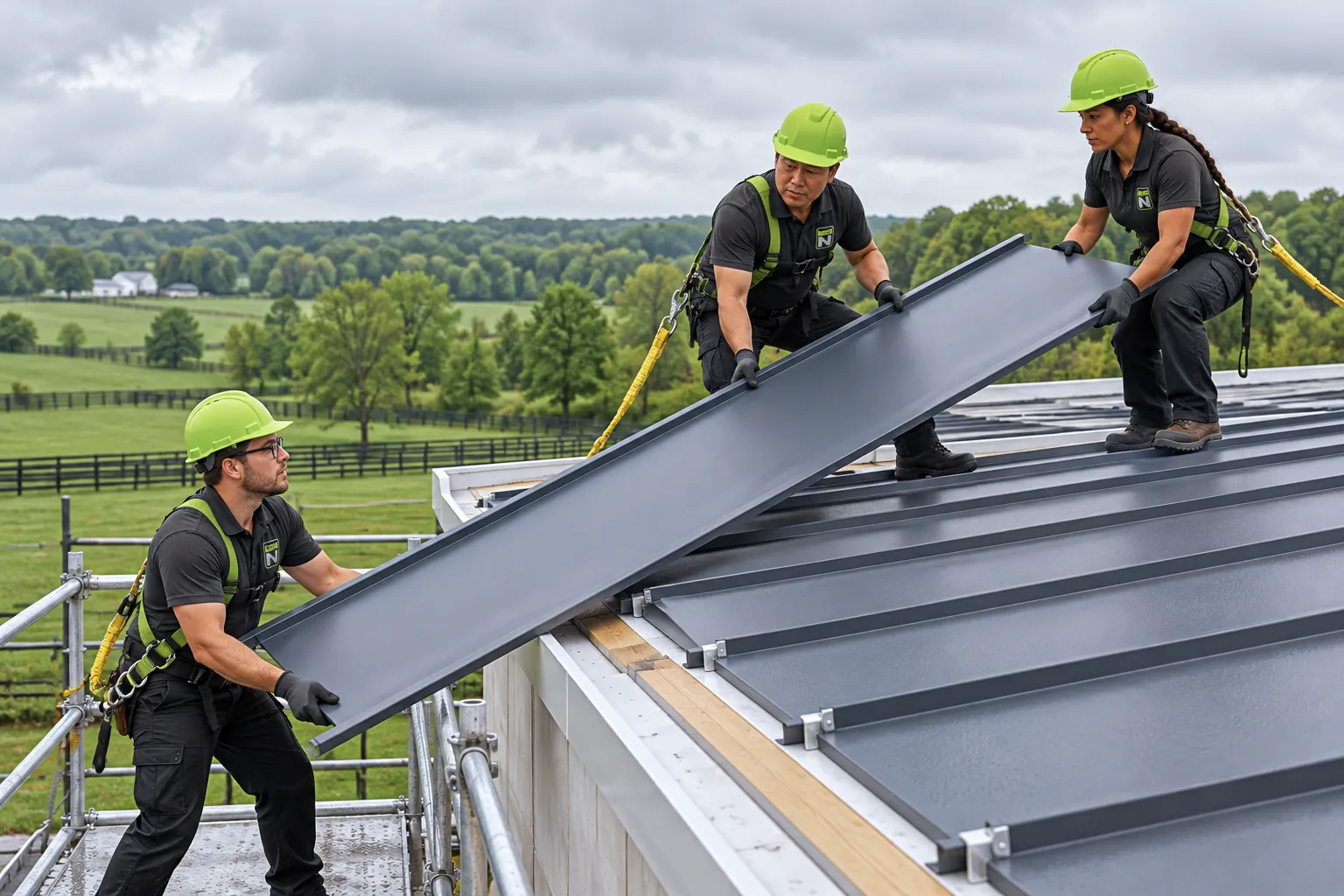
Panel roofs on plant offices, shops, and storage buildings on the same lot.
Commercial metal roofing in Nicholasville
Fixing a split curb flashing or a puncture near a fan between full replacements.
Commercial roof repair in NicholasvilleHarsher conditions on top and production underneath. Plant roofs carry grease or chemical exhaust, heavy process units on large curbs, daily service traffic, long drain runs, and expansion joints, all over operations with dust, odor, and noise limits. More penetrations per square foot means flashing makes up a bigger share of the work.
PVC and other chemical-rated membranes outlast standard TPO or EPDM near grease and process exhaust. Food-plant fans also get a grease containment box, solvent vents get checked against the maker's resistance chart, oil-dripping equipment gets drip pans, and hot stacks get metal heat shields.
Walkway pads on paths to RTUs, guardrails at the roof hatch, screens over skylights, platforms under heavy units, and supports that keep gas and conduit lines off the membrane. During replacement each item is reset, and pads get added where the old sheet shows worn paths.
In sections, each torn off and dried in before the crew leaves. The sequence is planned with the plant manager around shifts, dust-sensitive areas, and equipment shutdowns, with temporary seals at each finished edge. Open deck over food or clean areas gets protection from dust and falling fasteners.
Boards that thicken away from the drains build slope into the roof, and crickets push water around curbs and between drains. Ponding on plant roofs traces back to deck deflection, high or clogged drains, long drain spacing, and curbs in the water path. Each roof gets its own tapered layout, which also sets new curb and edge heights.
Tell us what runs under the roof and what vents onto it. We start with a roof walk alongside your plant manager and a sectioned plan.
Or call (270) 249-6474
Want a call back about your roof?
Leave a name and number, or call (270) 249-6474 now.