
Party-Wall Repairs
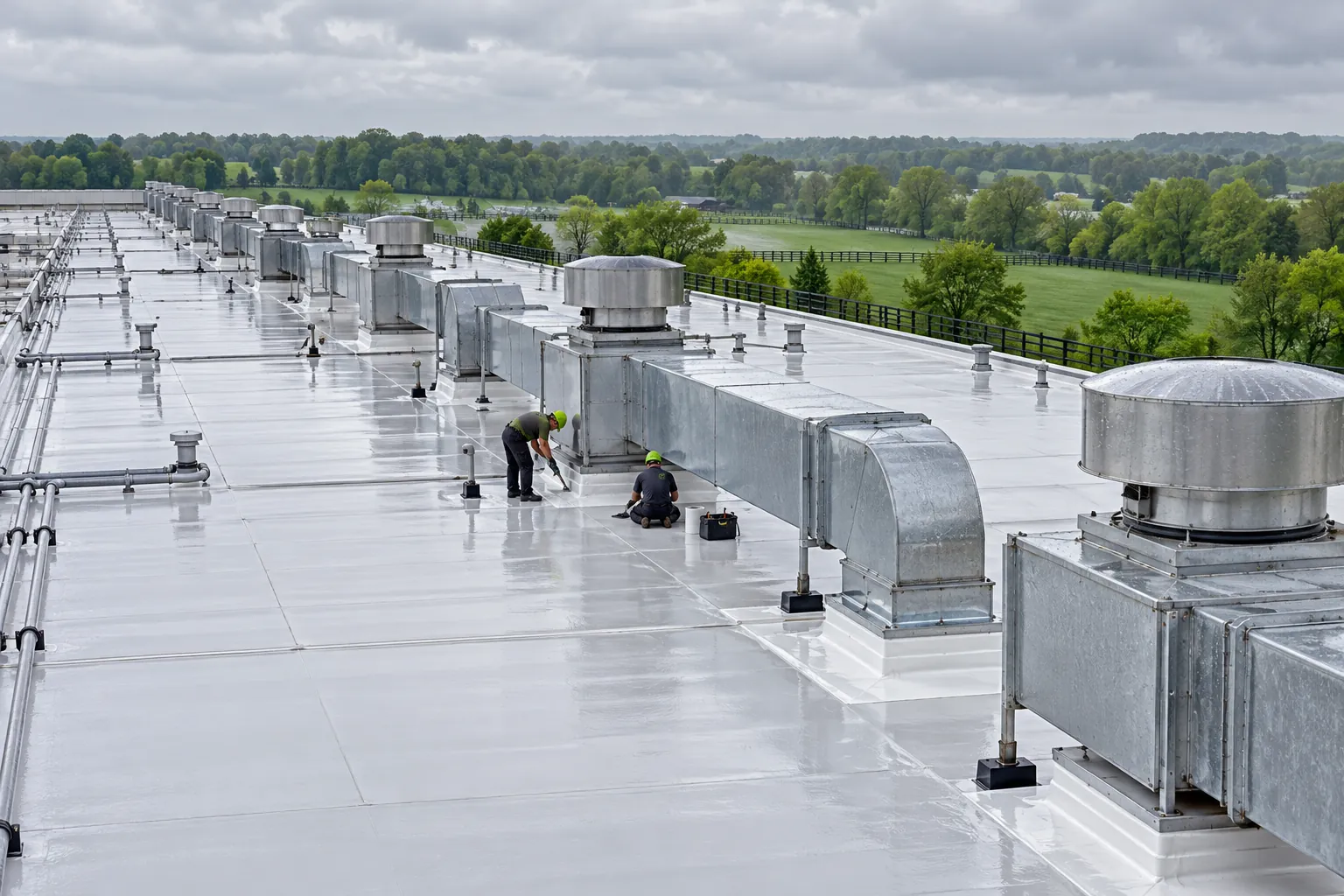
Leaks along a shared wall get new base flashing, counterflashing, and coping on your side, coordinated with the neighbor.
Commercial roof repair details

Commercial Roofing · Stanford, KY
As a Stanford commercial roofing contractor, we replace and repair storefront and county building roofs, with shared parapet walls and coping caps planned with the owner next door.
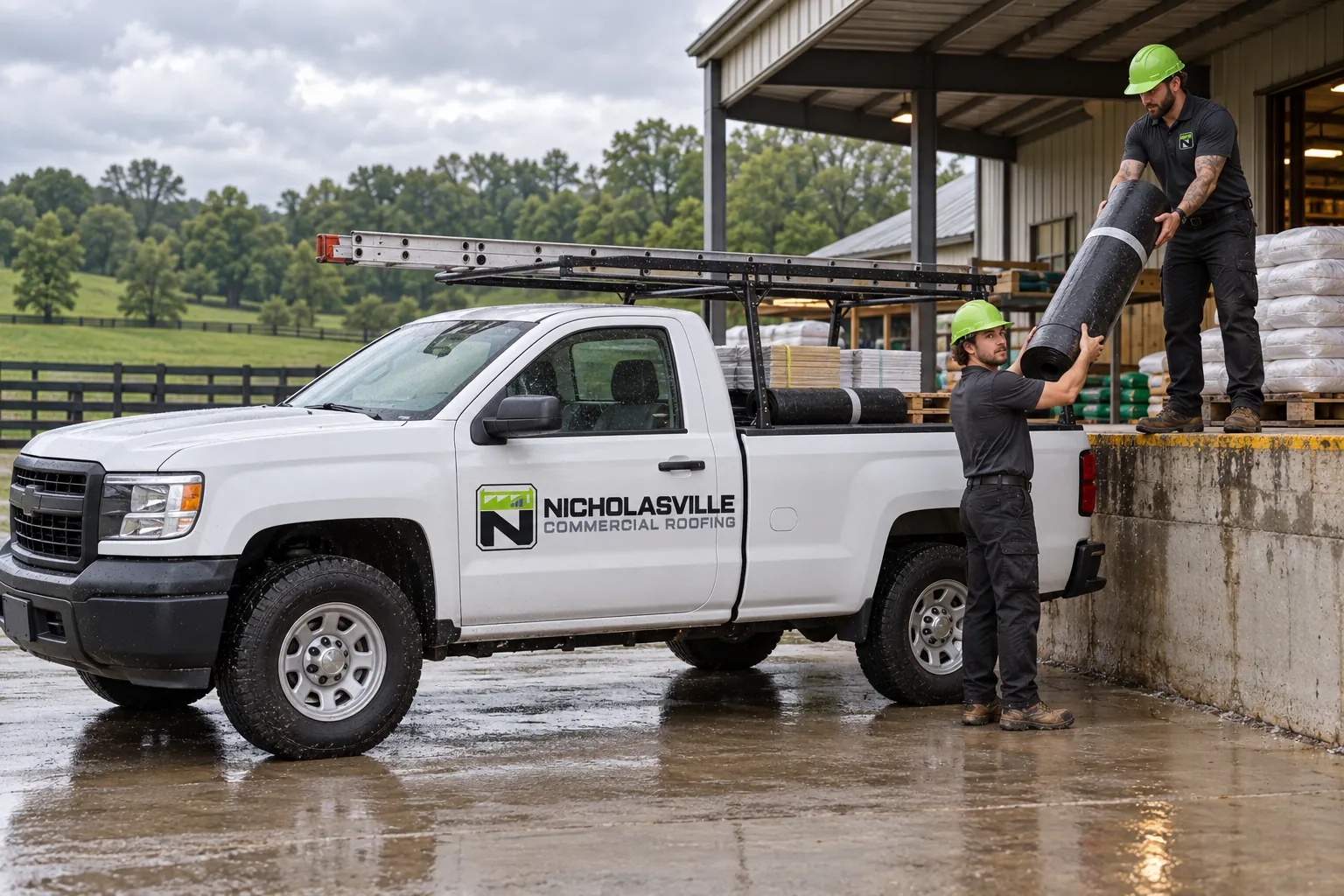
A Stanford commercial roofing contractor often works on roofs that end at a neighbor's wall. Storefronts sharing a wall need that owner's agreement on parapet flashing and coping caps along the shared side before tear-off starts.
Two offices review the work: the City of Stanford, with its own posted permit form, and the Lincoln County building inspector, listed by the state at the county health department in Stanford. Outside city limits, the county inspector is the only stop.
Attached roofs share walls, drains, and sometimes water. These five spots matter most.
Flashing on each face of a shared wall and the coping across its top serve both roofs, so a gap on either side lets water into both buildings.
Coping joints open as the metal moves, and a missing cleat lets wind lift the cap, exposing the top of the masonry.
Rows of storefronts sometimes drain across property lines through scuppers or interior drains, so one blocked outlet backs water onto a neighbor.
Older downtown roofs carry more than one layer, which the permit application has to list and which pushes the job to tear-off.
Small storefront roofs pack skylights, hatches, and vent stacks into tight space, leaving little room between flashing details.
What a replacement settles on a storefront that shares its walls.
Agreed flashing and coping along the shared wall close the gap that leaked into both buildings.
New coping caps on continuous cleats hold against wind at the top of the parapet wall.
Tear-off removes the stacked layers down to the deck, so the new roof sits on a clean, inspected deck.
Scuppers and drains set for your roof keep water from crossing onto, or arriving from, the roof next door.
Skylights, hatches, and stacks each get their own flashing, spaced so the laps stay clear of one another.
Systems for Stanford storefronts and county buildings, each tied cleanly into shared walls.
Leaks along a shared wall get new base flashing, counterflashing, and coping on your side, coordinated with the neighbor.
Commercial roof repair details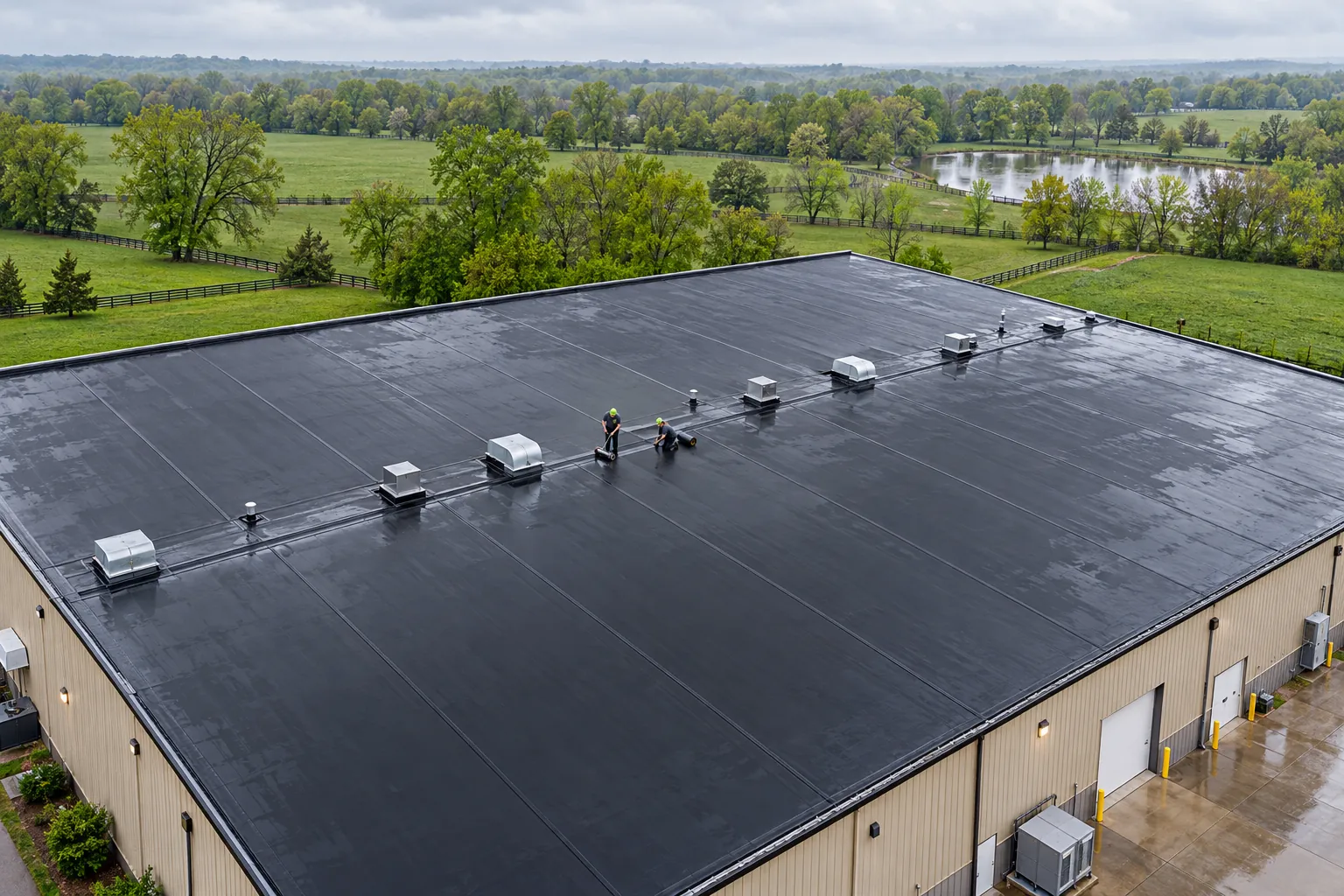
Downtown rubber roofs replaced with matching EPDM, with the shared parapet flashed in the same pass.
EPDM roofing details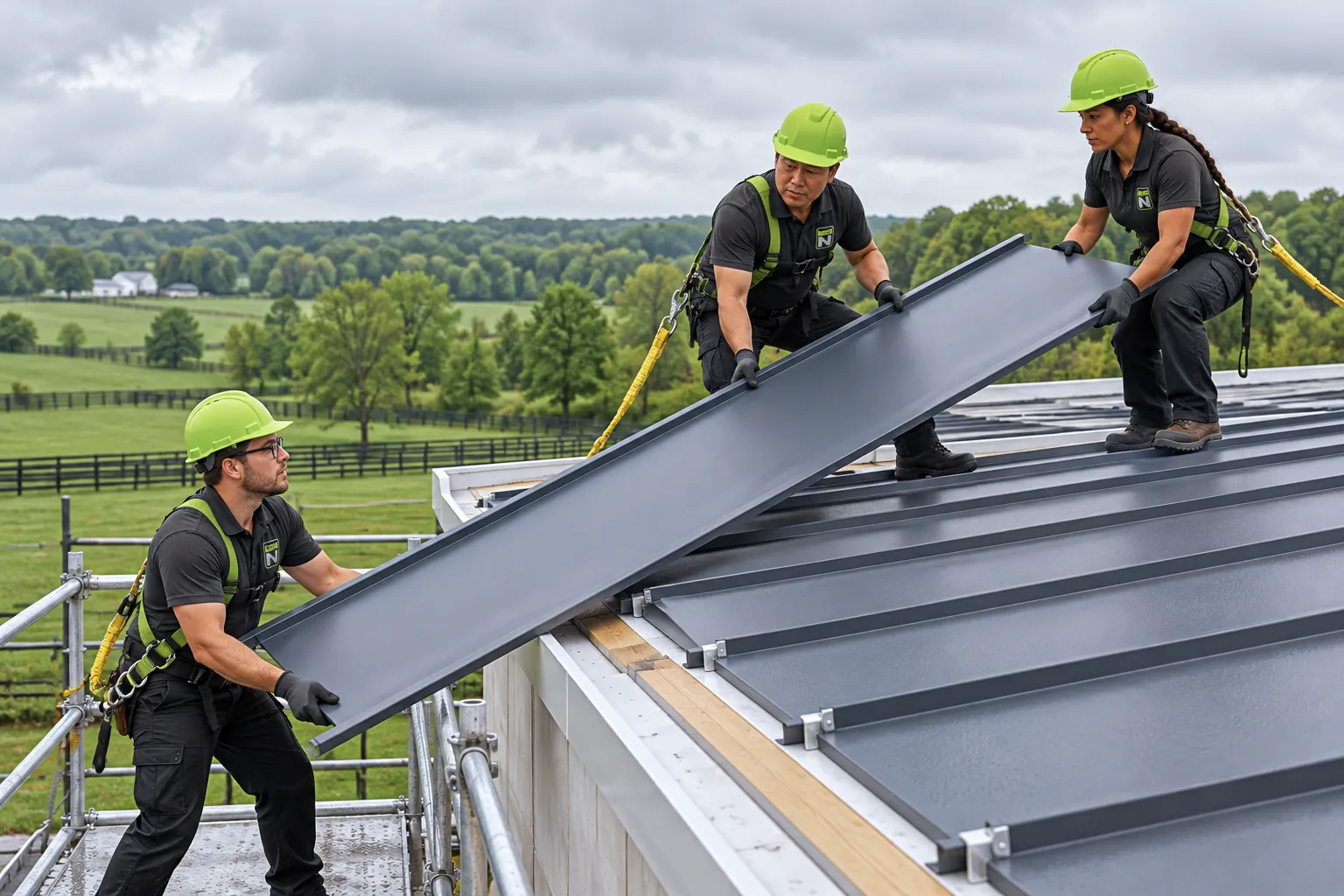
Standing seam or R-panel for pitched county and shop buildings outside the storefront rows.
Commercial metal roofing details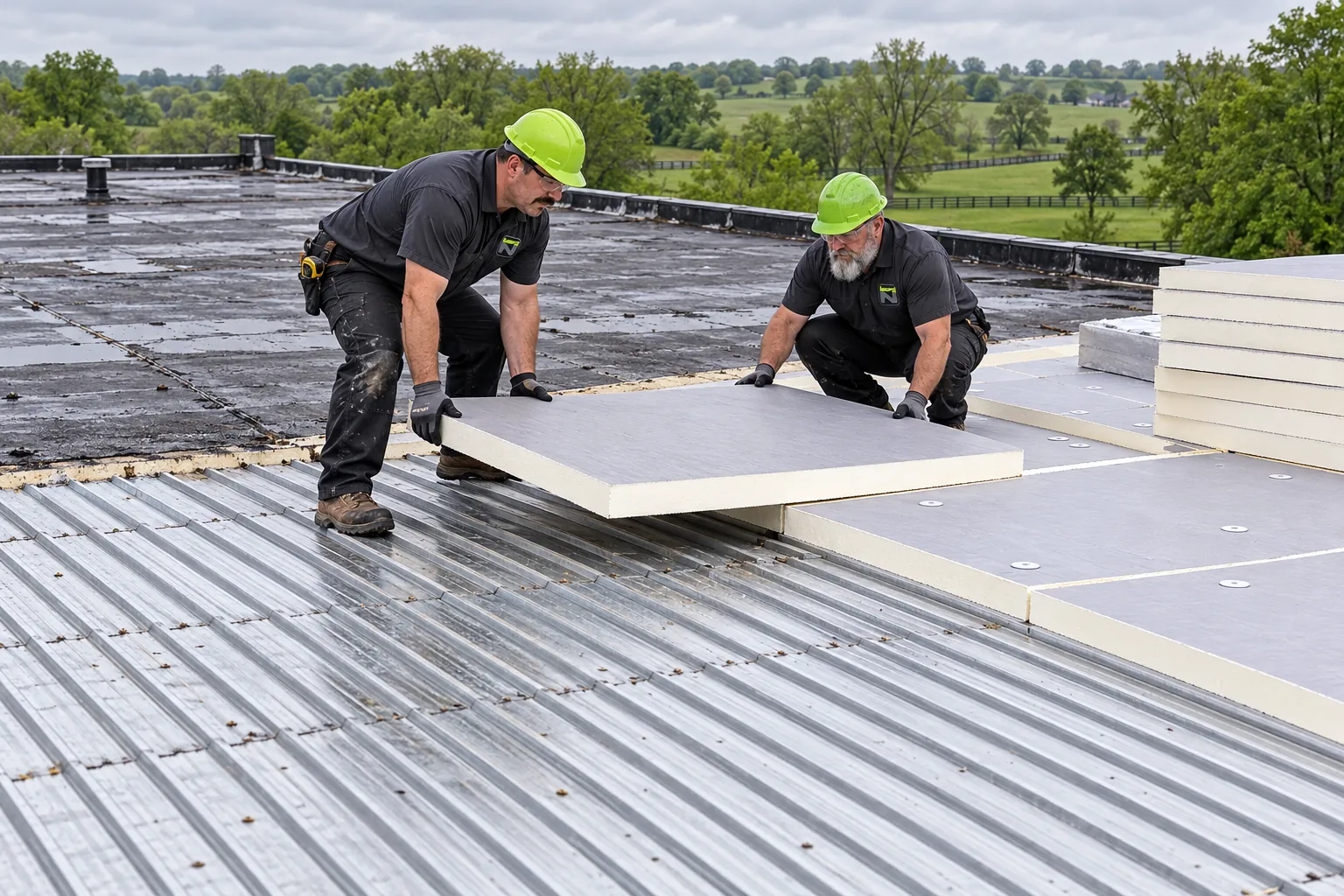
Multi-layer roofs come off to the deck, wet boards are hauled out, and new tapered insulation and membrane go on.
Flat roofing detailsWater at a shared wall can start on either roof. Call us and we will check both sides of the parapet with the neighbor's go-ahead.
Five steps for a storefront or county building roof in and around Stanford.
We walk your roof and, with permission, look over the shared wall, count existing layers, and photograph coping, flashing, and drains.
The layer count goes on the application.
The owner next door agrees on parapet flashing and coping along the shared wall, and on access for any work from their side.
The agreement is written down before tear-off.
Inside town, the roof work goes on the City of Stanford form and to the Lincoln County inspector; outside city limits, to the county inspector alone.
The application lists membrane, insulation, and edge changes.
Tear-off to the deck, deck repairs, new insulation and membrane, then base flashing up both faces of the shared wall as agreed.
Each section is dried in by evening.
Coping caps go on continuous cleats, drains and scuppers are checked, and a final walk covers the shared wall with the neighbor.
Photos of the wall go to both owners.
Is your building outside Stanford? We work in the towns below too; for anywhere else, call us or send us a message.
Two offices review Stanford roof work: the City of Stanford, which posts its own permit form, and the Lincoln County building inspector, whom the state lists at the county health department in Stanford. Outside city limits, the county inspector is the only stop.
List the existing roof type and layers, the new membrane or panels, insulation and cover board thickness, and any edge or gutter changes.
The state's Lincoln County sheet lists the county building inspector at the county health department in Stanford. Call ahead with the roof area, existing layers, and the new system, and ask whether the City of Stanford also needs its form for your address.
Building code limits how many roof layers can stay in place, and the permit application asks for the count. Older downtown roofs often carry more than one, which sends the job to tear-off and adds disposal to the scope.
Both owners, in practice. The coping and the flashing on each face serve both roofs, so a storefront that shares a wall needs the neighbor's agreement on that detail before tear-off. Writing down who pays for and maintains which side heads off disputes later.
Your roof is replaced on its own, with flashing carried up your face of the shared wall and the coping detail agreed with the neighbor. When the neighbor's side is letting water into the wall, the inspection notes it and both owners see the photos.
Tell us about the storefront and the wall you share. We start with your roof, the layer count, and a plan for the party wall.
Or call (270) 249-6474
Want a call back about your roof?
Leave a name and number, or call (270) 249-6474 now.