Cooled Buildings
TPO Over Tapered Boards
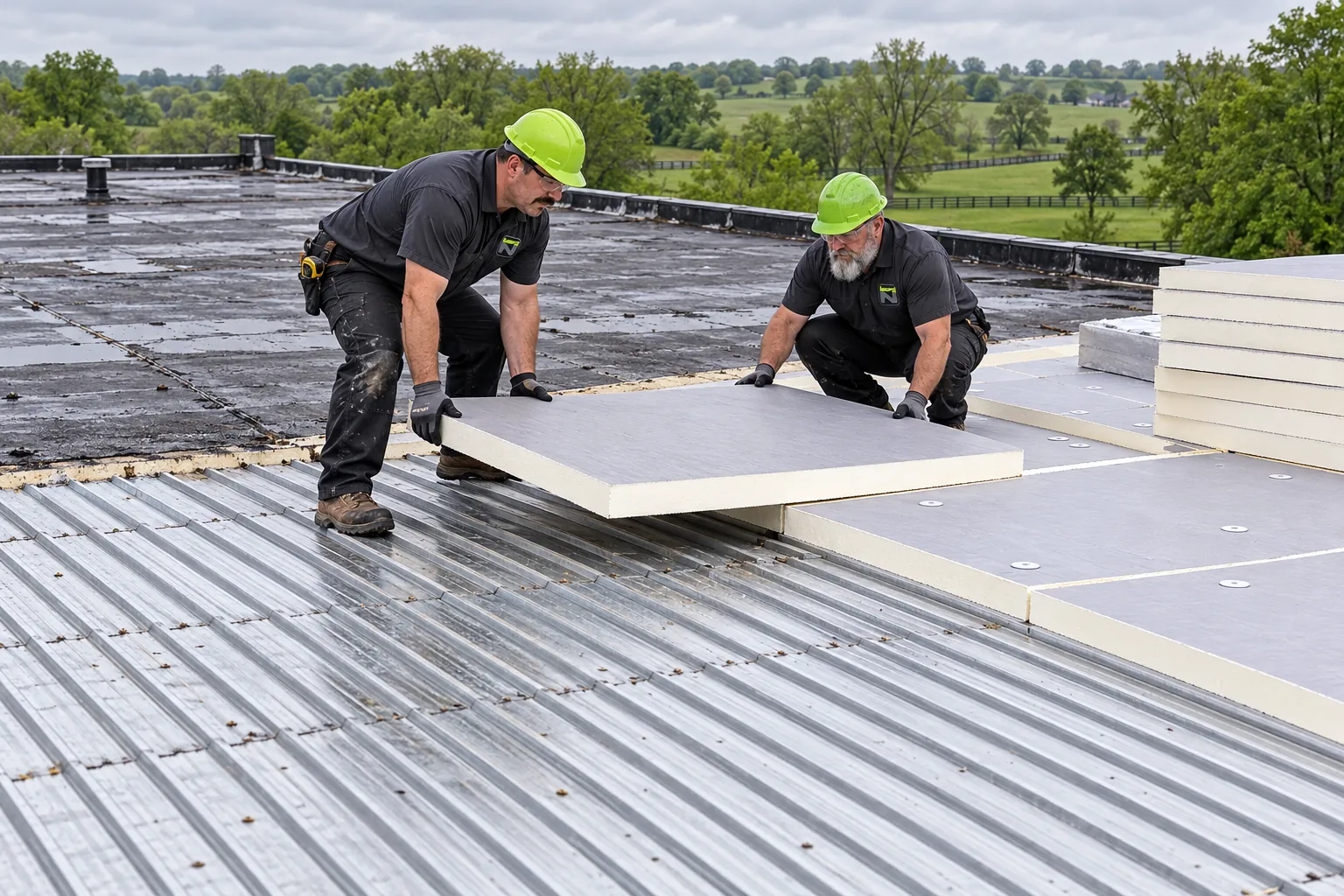
White heat-welded TPO over a tapered layout drawn for your drains suits warehouses and retail floors cooled all summer.
Flat Roofing · Nicholasville, KY
As a Nicholasville flat roofing contractor, we replace worn low-slope roofs with new membrane over tapered insulation, so water reaches the drains instead of sitting.
As a Nicholasville flat roofing contractor, we weigh three ways to end ponding on a low-slope roof before writing a scope.
Retrofit framing builds a new slope over the old flat roof; see commercial metal roofing for panel choices.
Ponding water on a commercial flat roof has a cause you can find, and these five spots hold most of them.
Steel deck that deflects between joists leaves shallow bowls mid-span. Water collects there after every rain and slowly wears the membrane thin.
A drain set above the roof around it, or a strainer packed with leaves, strands a ring of water. Resetting the drain body fixes one; clearing it fixes the other.
Rooftop unit curbs and equipment rails sit across the water path. With no cricket on the high side, rain backs up against them.
Large roofs with few drains need more fall in the insulation to move water the extra distance. With too little, the middle of each run ponds.
Scuppers set at the old roof height end up too high once insulation is added. Overflow then spills down the wall instead of through the scupper.
Four ways to replace a flat roof, each tied to what sits under the old membrane.
Cooled Buildings
White heat-welded TPO over a tapered layout drawn for your drains suits warehouses and retail floors cooled all summer.
Older Rubber Roofs
Black or white rubber with taped seams fits roofs that already carry EPDM or tie into a rubber addition.
Wet or Two Layers
Every layer comes off, wet insulation is hauled away, and rusted deck is replaced before new boards and membrane go down.
One Dry Layer
Cover board and new membrane go over a single dry roof, saving tear-off labor, and edges, curbs, and drains get raised to match.
A replacement built around drainage changes how the roof behaves after every storm.

Tapered insulation for a flat roof builds fall toward each drain, so the roof dries instead of holding rings.
Drain bodies and scuppers reset to the finished surface take water at the low point instead of above it.
Small sloped sections push water around unit curbs so it no longer backs up on the high side.
Tear-off exposes rusted or soft deck, which gets replaced before insulation covers it again.
New boards with staggered joints replace soaked ones, so heat stays where the building wants it.
Ponds that outlast the weekend are wearing the membrane down. Call and we will find what is trapping the water on your flat roof.
Five stages for replacing a low-slope roof that ponds.
We map where water stands after rain, check drain heights, and take core cuts to measure how wet the insulation is. Those readings decide tear-off or recover.
Drain heights are measured against the roof around them.
A tapered plan shows each drain, cricket size, and finished insulation height. Those heights also set the new curb, edge metal, and scupper heights.
The layout is drawn for your roof, never copied from another.
Old membrane and wet boards come off only as far as the crew can dry in by evening. Soft or rusted deck is replaced on the spot.
Temporary seals close each section overnight.
Tapered boards go down in staggered layers, cover board goes on top, and the TPO or EPDM sheet follows with seams welded or taped.
Crickets go in behind every curb in the water path.
Drain bodies, scuppers, gutters, and edge metal are set at the finished height, and the first rain afterward shows where water goes.
Photos of each drain and scupper go with the closeout.
Related work on buildings with a low-slope roof.
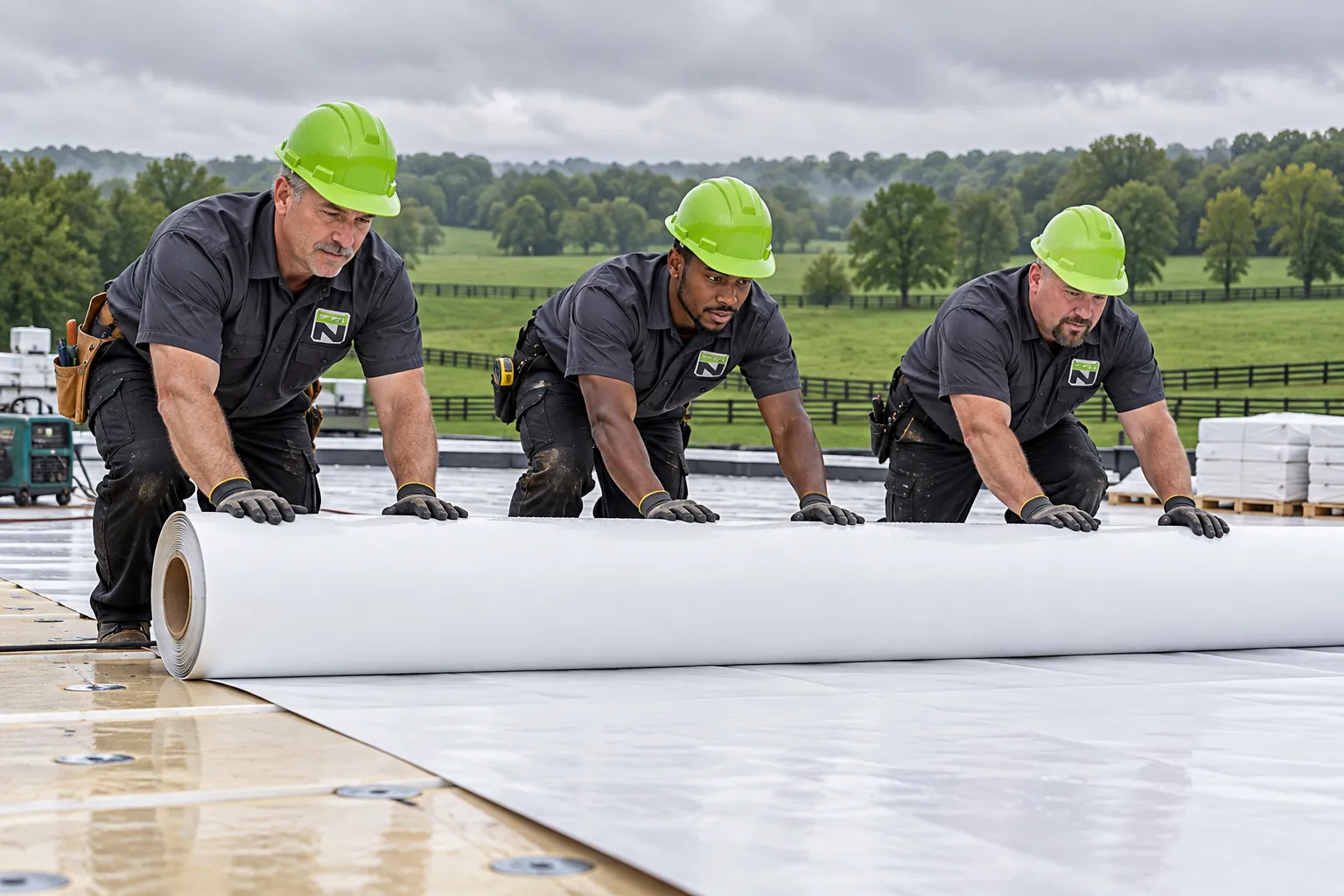
Heat-welded white membrane for flat roofs over cooled offices and retail floors.
TPO roofing in Nicholasville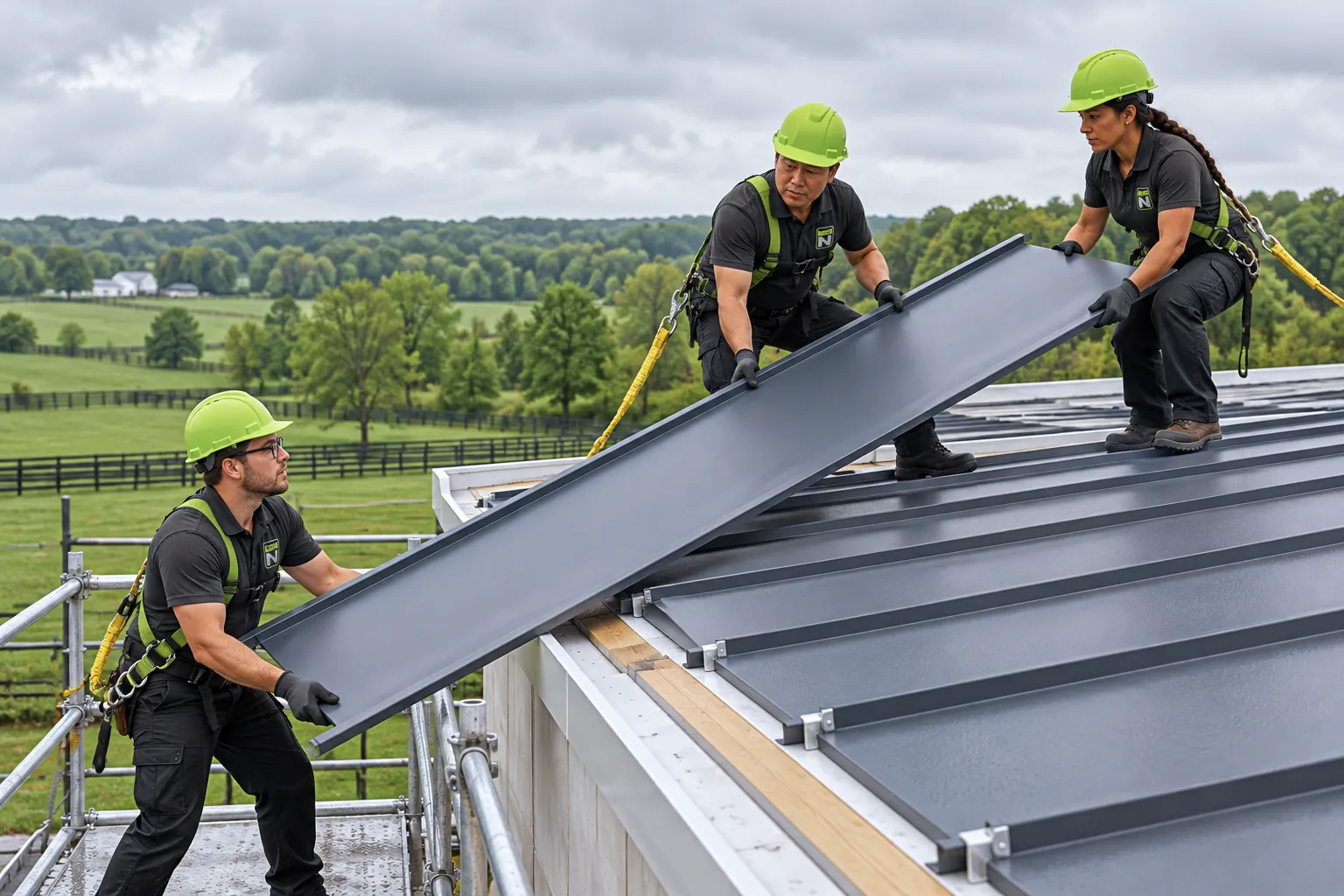
Retrofit framing that turns a chronically ponding flat roof into a pitched panel roof.
Commercial metal roofing in Nicholasville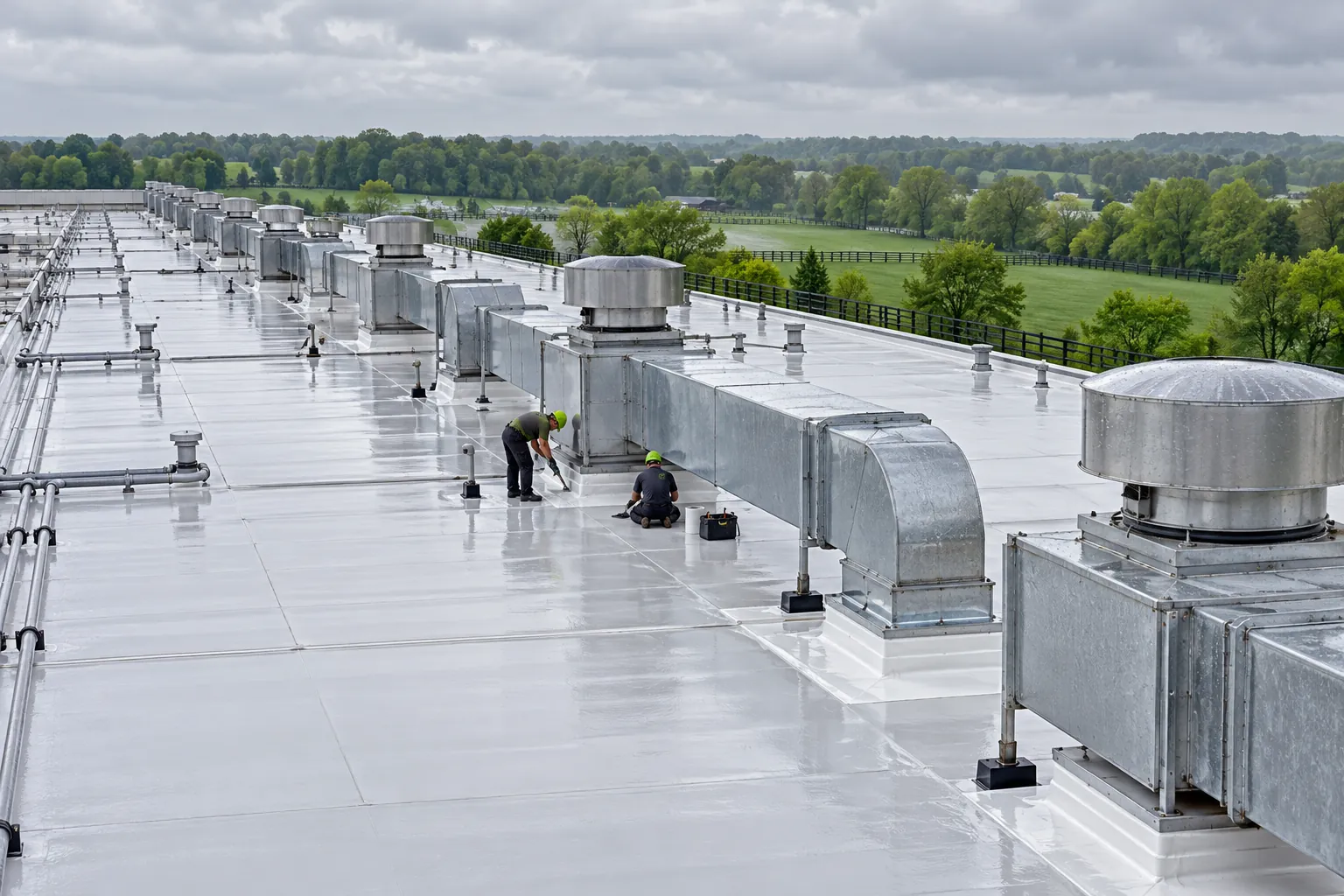
Large plant roofs where long drain runs and expansion joints need a tapered plan.
Industrial roofing in NicholasvilleA few repeat causes: deck that sags between joists, drains set too high or clogged at the strainer, long distances between drains, and curbs that block the water path. Each has its own fix, from resetting a drain body to adding tapered insulation and crickets, so the roof walk finds which cause your roof has.
Yes. New insulation raises the roof surface, so drain bodies, scuppers, and gutters are reset to the finished height. A scupper left at the old height ends up above the water it was meant to carry, and overflow spills down the wall.
On a roof with standing water after rain, yes. Tapered boards get thicker away from each drain, building fall into the roof so water leaves instead of sitting. A roof that already drains well gets flat insulation and saves that cost.
Price follows roof size, how many layers come off, how wet the insulation is, deck repairs, tapered layouts, and the count of curbs and drains. Two flat roofs of equal size can land far apart once those are counted, so the estimate is written after measurements and core cuts.
When core cuts show a single roof layer with dry insulation, yes. Cover board and new membrane go over the old roof, which saves tear-off and disposal. A second existing layer or wet boards send the job to tear-off, and the building code limits how many layers can stay.
Curbs get extended so flashing reaches proper height above the new, thicker roof. The HVAC contractor disconnects and lifts each unit, the curb is raised and flashed, and the unit is set back and reconnected, one roof section at a time.
Send photos of where the water sits, or just call. We start with a drain-height check, core cuts, and a tapered plan for your roof.
Or call (270) 249-6474
Want a call back about your roof?
Leave a name and number, or call (270) 249-6474 now.