TPO and PVC
Membrane Seam Repair
Lifted laps are cleaned, dried, rewelded with hot air, and probed. A flat roof seam repair on a warehouse often covers a full run of lap beyond the wet spot.

Commercial Roof Repair · Nicholasville, KY
As a Nicholasville commercial roof repair contractor, we trace leaks to the failed seam, flashing, drain, or fastener and fix that detail on membrane and metal roofs.
As a Nicholasville commercial roof repair contractor, we decide on the roof whether a repair holds or the roof has moved past it.
Repair or replace a leaking commercial roof? Core cuts around the leak settle it, since wet insulation spreads farther than the ceiling stain shows.
Water rarely comes in where it shows up inside. These five places are where the repair visit looks first.
Seams split where welds missed, tape lifted, or adhesive aged. Water enters at the lap and runs along the deck to a ceiling tile far away.
Flashing cracks where it turns up a rooftop unit curb, and condensate lines dripping onto the roof keep the area wet.
Loose clamping rings and cracked drain flashing let water slip around the drain instead of into it.
Base flashing pulls away from parapet walls, and coping caps separate at their joints, letting rain behind the membrane.
On metal roofs, backed-out screws, cracked washers, and dried lap sealant account for most leaks over open framing.
Repairs done in the same system as the roof around them, so the patch ties in and weathers alike.
TPO and PVC
Lifted laps are cleaned, dried, rewelded with hot air, and probed. A flat roof seam repair on a warehouse often covers a full run of lap beyond the wet spot.
EPDM
Peeled seam tape, split T-joints, and cracked pipe boots get cleaned, primed, and covered with new tape or cover patches.
Standing Seam and R-Panel
Oversized screws with fresh washers, resealed end laps, and matching-profile panel sections replace what failed.
Every System
Curb wraps, wall base flashing, counterflashing, and drain clamping rings are rebuilt where water was getting past them.
Fixing the detail early keeps a small leak from turning into a replacement.
Water that sits under the membrane soaks the insulation around the leak a little more each storm. Stopping it early keeps that wet area small.
Steel deck under a long-running leak rusts and thins. A timely fix keeps deck replacement out of the job.
Ceiling tiles, inventory, and equipment under the leak stop taking water once the source is closed.
Each repair goes on a roof plan with photos, so a later replacement decision rests on what has failed and where.
Roofs with years left get repairs; one that has moved past them gets a replacement plan, with both priced when both make sense.
Move what you can from under the drip, then call us. A roof walk finds where the water gets in, and the repair closes it.
What a repair visit covers, from the stain inside to the fixed detail on the roof.
We start under the leak, then walk the roof above and upslope of it, checking seams, curbs, drains, and flashing until the entry point turns up.
Photos tie the stain inside to the spot on the roof.
A moisture meter and, where needed, a core cut show how far water has spread under the membrane from the entry point.
Wet insulation is outlined on the roof plan.
The scope names the detail, the materials matched to your roof system, and how large an area around it gets opened or replaced.
You see the repair price before work starts.
Wet insulation around the leak is cut out and replaced, and the seam, flashing, or fasteners are rebuilt in the same system as the roof.
Rust found under the opening is treated or the deck is replaced.
Welds are probed, laps checked, and photos of the finished repair go on your roof plan for the next visit.
The plan builds into a history of the roof.
When repairs stop being the right answer, these are the next steps.
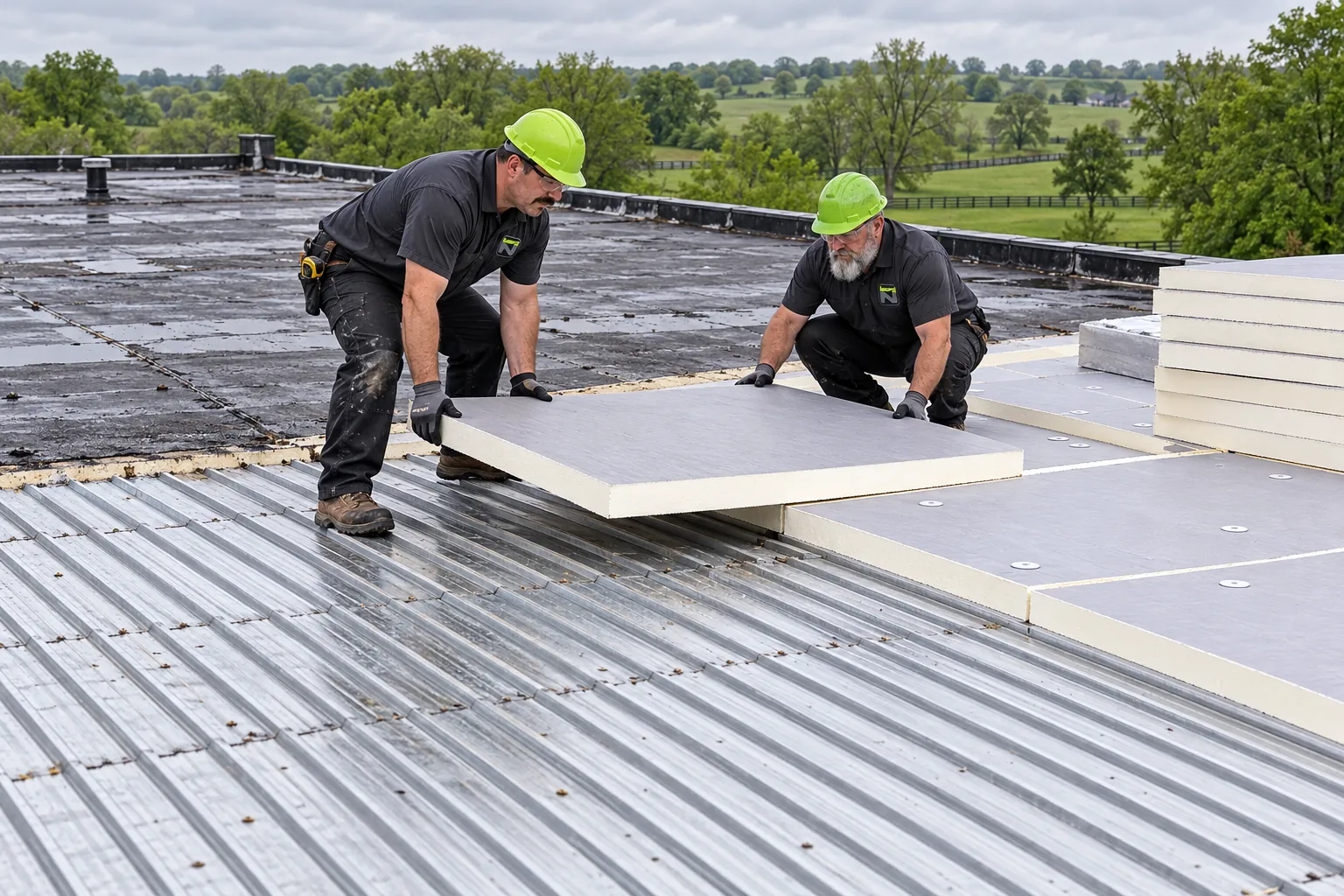
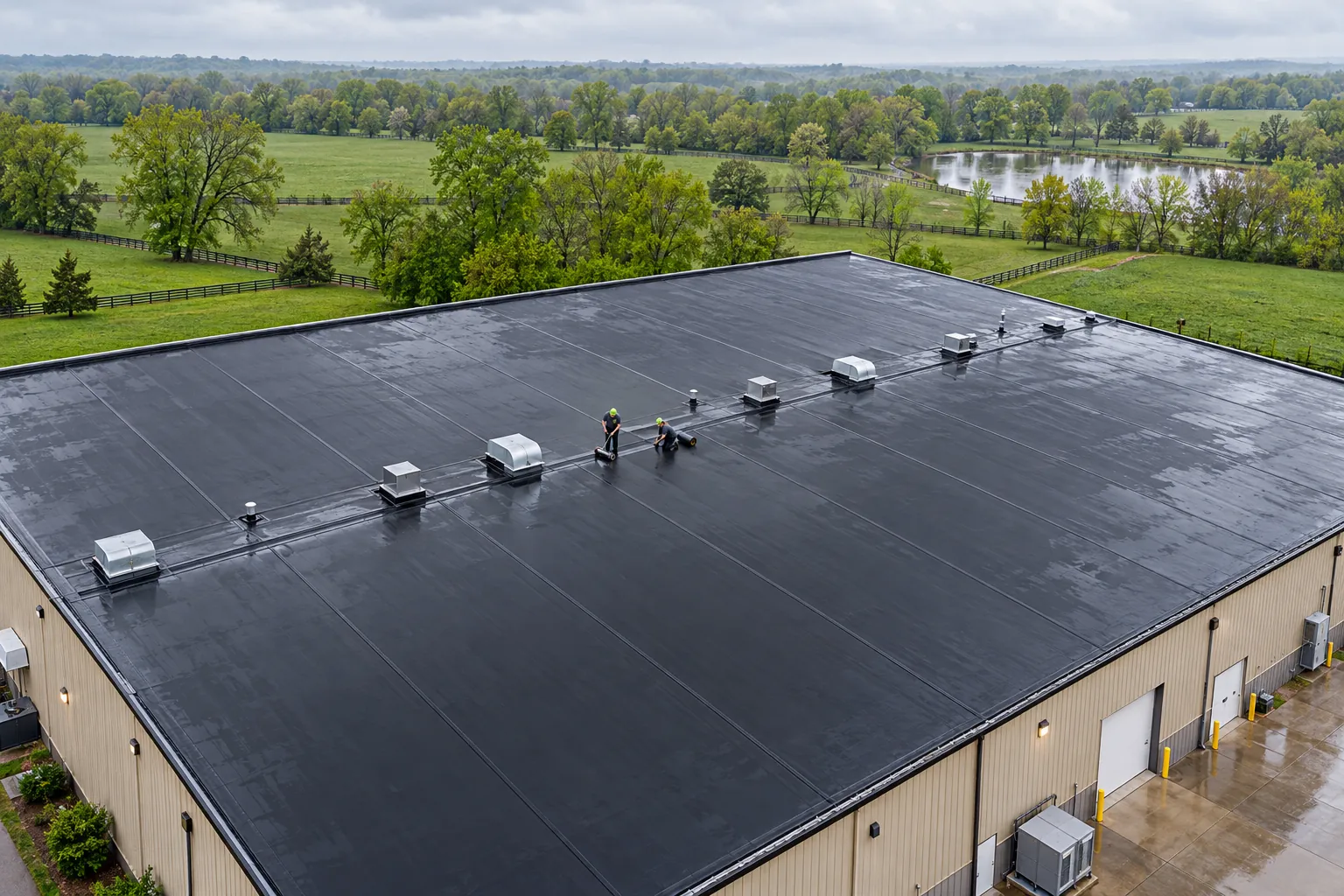
Replacement with tapered insulation when repairs keep chasing ponding leaks.
Flat roofing in Nicholasville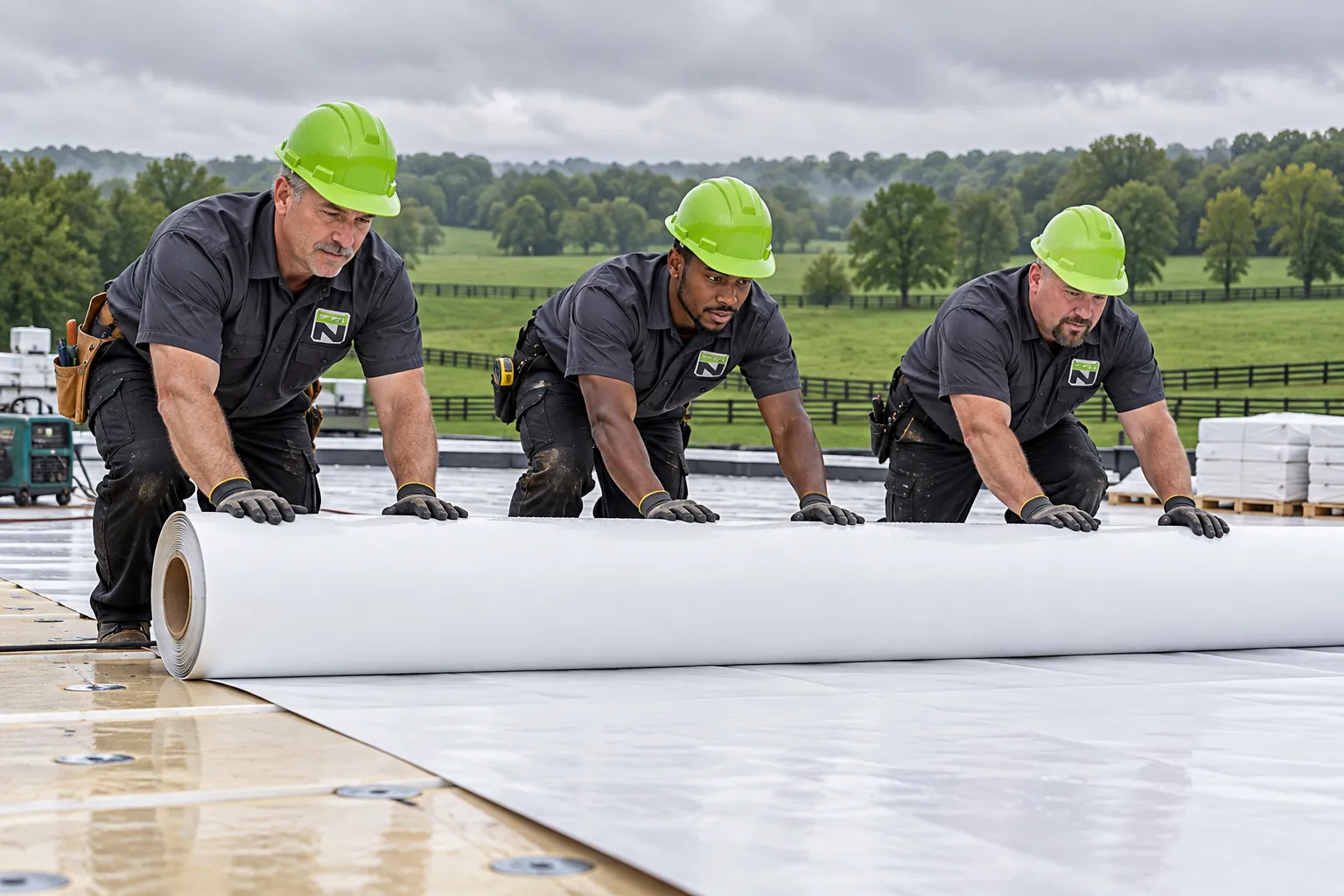
New welded white membrane once open laps outnumber tight ones across the field.
TPO roofing in Nicholasville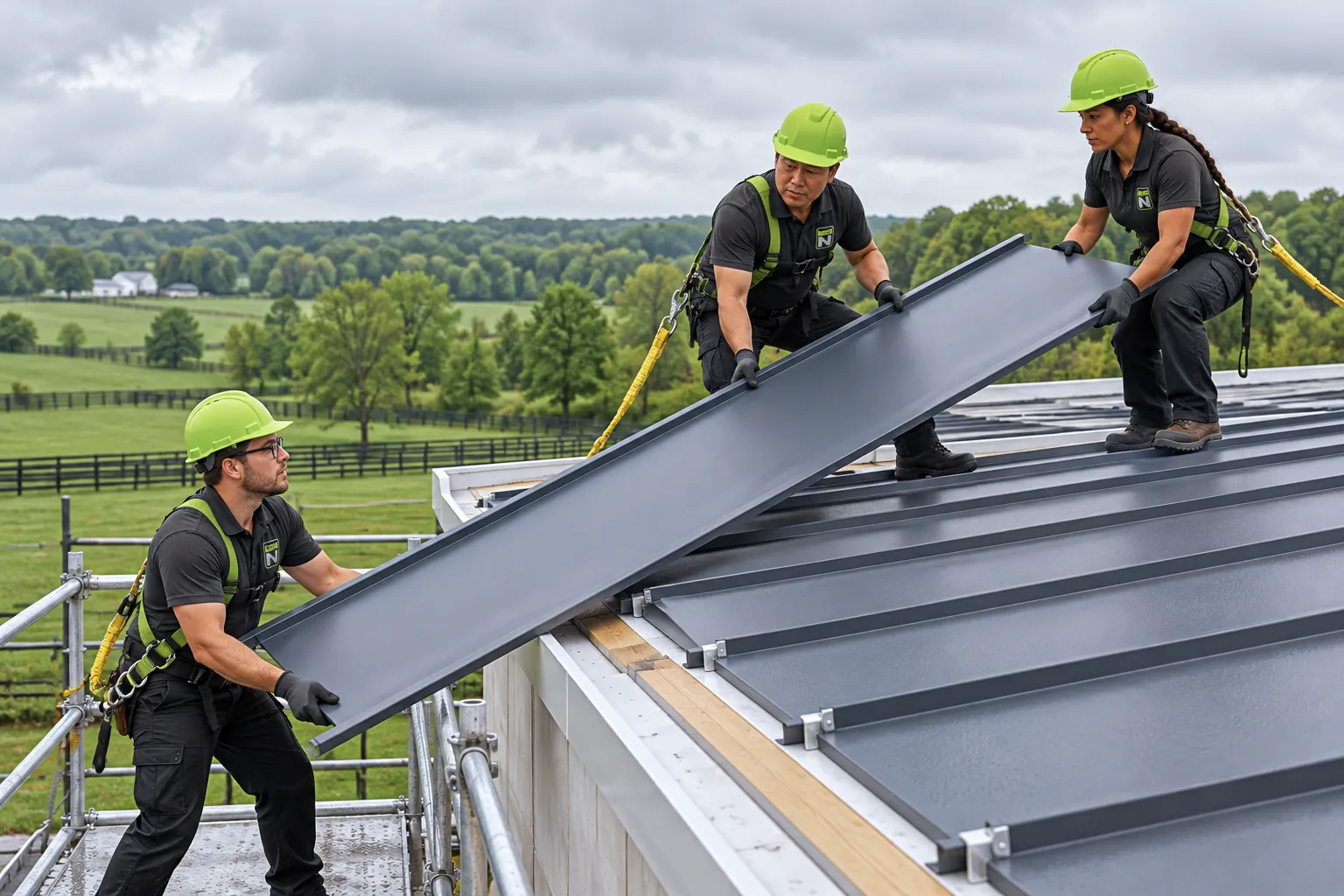
Panel replacement when rust-through and loose fastener rows spread across the roof.
Commercial metal roofing in NicholasvilleFrom the inside out. The visit starts at the stain or drip, then moves to the roof above and upslope, since water often travels along the deck before it drops. Seams, curbs, drains, and wall flashing get checked in that area, and a moisture meter shows how far the water spread.
Most leak repairs go ahead in cold weather once the area is dry. Membrane welds and seam tape need clean, dry surfaces, so frost and snow get cleared first, and some adhesives wait for a milder day. A temporary repair holds the area until the permanent one can go in.
Repair makes sense when the wet area is small and the membrane has years left. Replacement makes sense when wet insulation, open seams, and deck rust spread across large parts of the field. Core cuts around the leak show how far water has gone, and that answer drives the decision.
The size of the wet area, the roof system, access, and how much has to be opened up. A lifted seam on a TPO roof is a small job; a curb leak that soaked insulation across a bay takes more. The written scope names the detail and the area replaced before work starts.
Repairs use the same system as the roof: TPO welded to TPO, EPDM taped to EPDM, and metal panels matched in profile, gauge, and paint. That keeps the repaired area weathering like the roof around it.
Move or cover stock and equipment under the drip, set out a bucket or tarp, and note when the leak shows up, since some only appear in wind-driven rain. Photos of the stain and ceiling tiles help, as does access to the roof hatch or ladder.
Tell us where the water shows up and what the roof is made of. We trace the leak, write the repair, and fix the detail.
Or call (270) 249-6474
Want a call back about your roof?
Leave a name and number, or call (270) 249-6474 now.