Wet or Layered Roofs
Tear-Off and New EPDM
Soaked insulation and every old layer come off, damaged deck gets repaired, and new boards and rubber go down. This is the path once a roof carries two layers.
EPDM Roofing · Nicholasville, KY
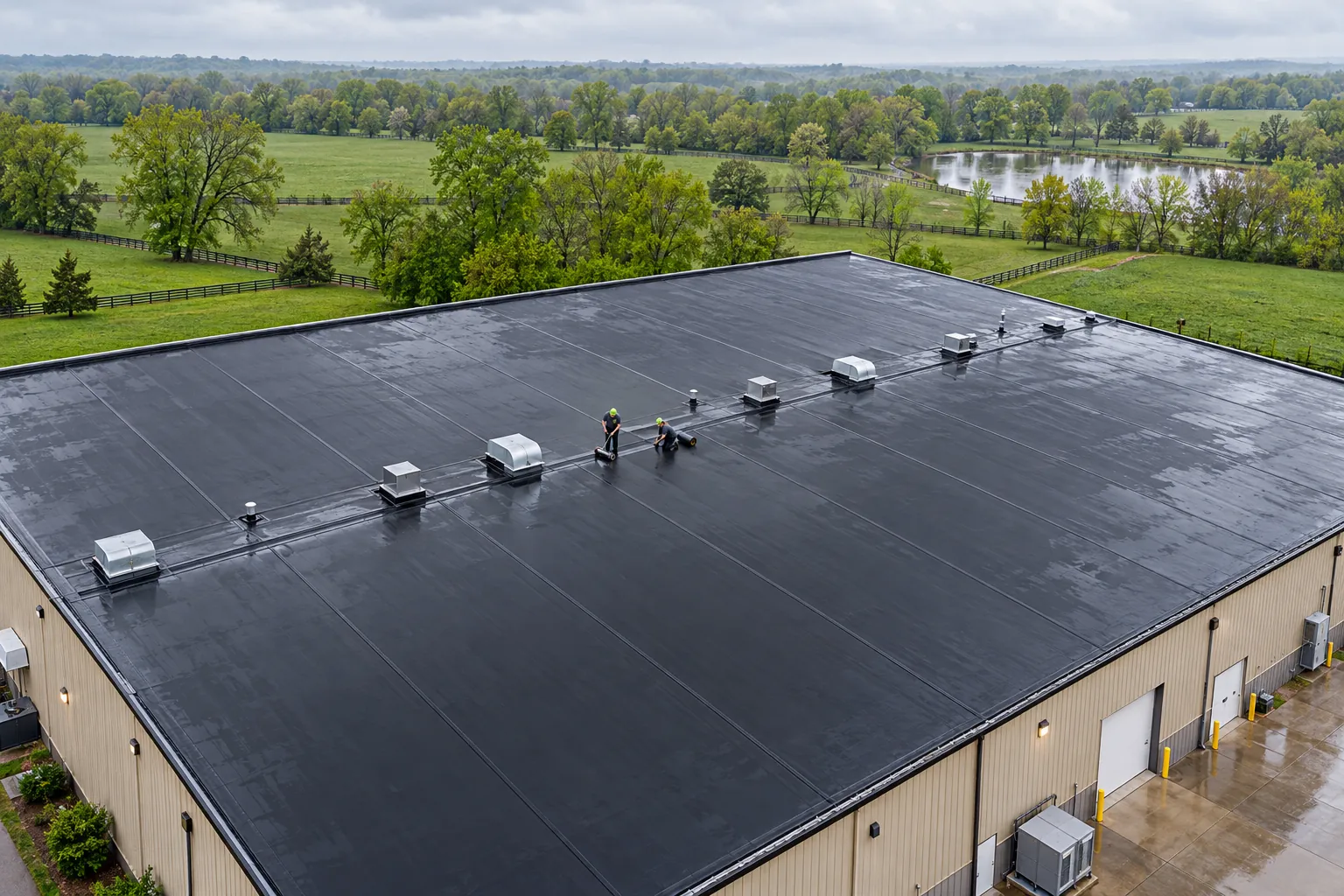
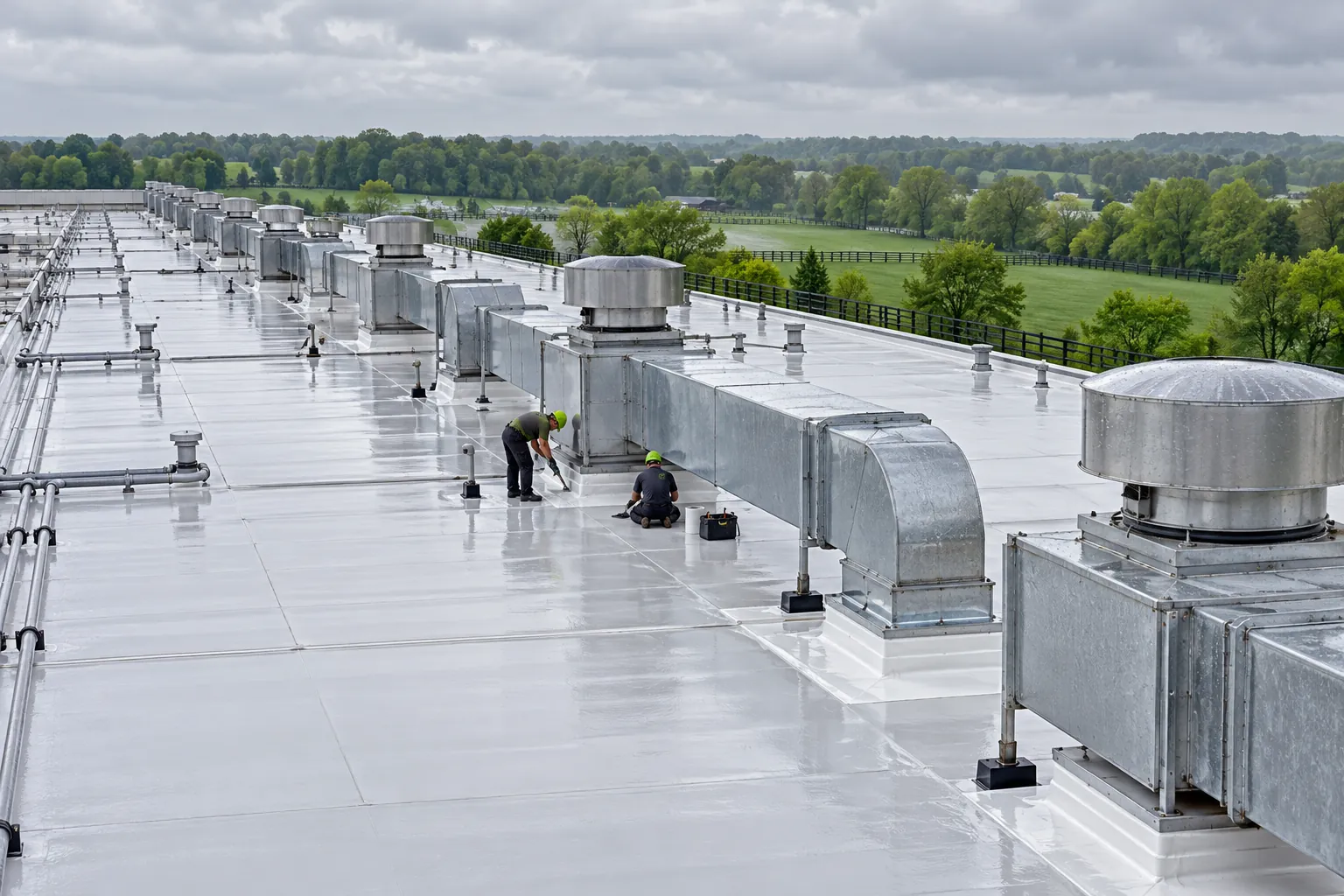
As a Nicholasville EPDM roofing contractor, we install black and white rubber roofs with primed, taped seams on offices, schools, additions, and older flat roofs.
As a Nicholasville EPDM roofing contractor, we set black and white rubber beside TPO so the sheet matches the building under it.
White rubber pays off over spaces that run air conditioning all summer. Black rubber stays the standard over storage, shops, and spaces heated more than cooled.
EPDM failures sit at laps, patches, and flashing, so these five areas get checked before any talk of replacement.
Seam tape lifting at its edge, and T-joints where three sheets meet without a cover patch, are the first openings on a rubber roof.
Standing water left after a storm softens adhesive at nearby laps over time. Tapered insulation toward the drains keeps those rings from forming.
Rubber pipe boots crack at the clamp, and curb flashing shrinks away from its corners. Both let water down beside rooftop units and plumbing vents.
Membrane wrapped up the wall under a coping cap pulls loose as it shrinks, opening a gap at the base where wall meets roof.
Hailstones split rubber where nothing firm sits under it. Spots over soaked insulation and thin cover board take the damage first.
Four ways EPDM goes onto a commercial roof here, picked by what the core cuts and the existing roof show.
Wet or Layered Roofs
Soaked insulation and every old layer come off, damaged deck gets repaired, and new boards and rubber go down. This is the path once a roof carries two layers.
One Dry Layer
Fresh cover board goes over the old surface, rubber is fastened or adhered on top, and raised edge metal covers the added height. Core cuts must test dry first.
Large Open Decks
Plates and screws in the laps hold the sheet on wide steel decks, keeping adhesive work to the perimeter and the flashing details.
Additions and Canopies
Adhesive across the whole sheet suits additions tied into an existing rubber roof, covered walkways, and canopies with short runs.
What a new rubber roof does for the building, part by part.
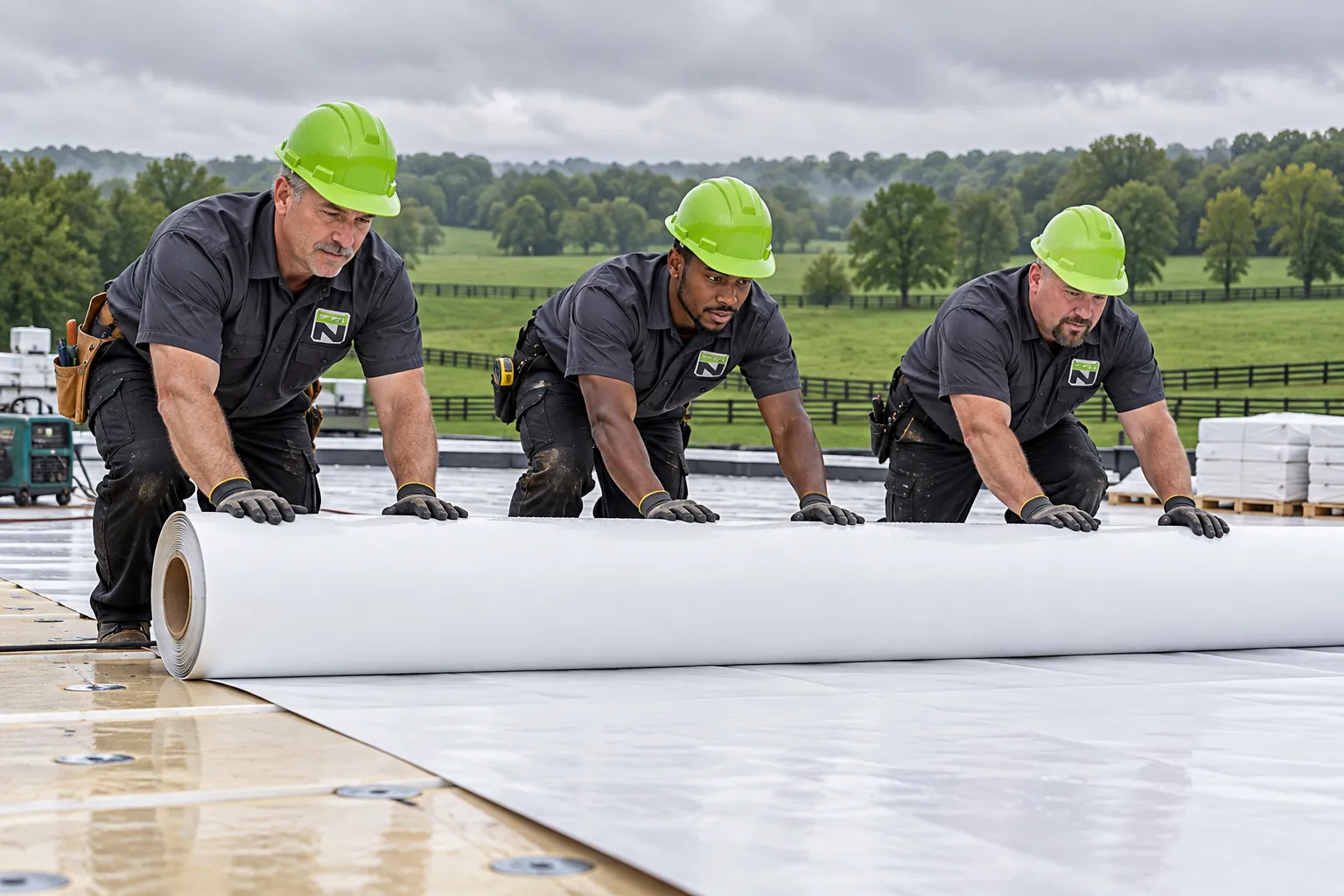
Rubber stays pliable through hard freezes, so seams and flashing move with the deck instead of cracking.
Large EPDM panels cover more roof per sheet than narrow rolls, leaving fewer laps for water to find.
New EPDM ties into existing rubber roofs on additions and wings with no change of system at the joint.
High-density cover board under the sheet takes the impact that would otherwise bruise rubber over soft insulation.
White EPDM over air-conditioned offices keeps the roof surface cooler through Kentucky summers.
A lifted EPDM lap lets water travel under the rubber before it shows inside. Call us and we will check the laps, reprime, and retape what opened.
Five stages for a new rubber roof, from core cuts to the last cover patch.
Readings from core cuts and a moisture check tell us whether the old insulation holds water and how many roof layers the deck carries. Results land on a plan of your roof.
The wet-or-dry answer picks recover or tear-off.
Cooling load decides the color: white rubber over air-conditioned space, black over storage and shops. Recover or tear-off follows from the core cut results.
Sheet thickness is set by hail exposure and foot traffic.
Insulation or cover board goes down first, then the rubber panels are unrolled and left to relax before they are fastened or adhered.
Tapered boards go where the old roof held water.
Both sheet surfaces get cleaned and primed at each lap, seam tape goes between them, and a silicone roller sets the bond. T-joints get a cover patch.
Primer flashes off before any tape goes down.
Pipe boots, curb wraps, and wall flashing go on, coping caps close the parapets, and every lap, T-joint, and patch edge gets checked before sign-off.
Photos of the laps and flashing go with the closeout.
Work that often sits next to a rubber roof job on the same building.
White heat-welded sheet for cooled warehouses and retail floors, with seams fused into one membrane.
TPO roofing in Nicholasville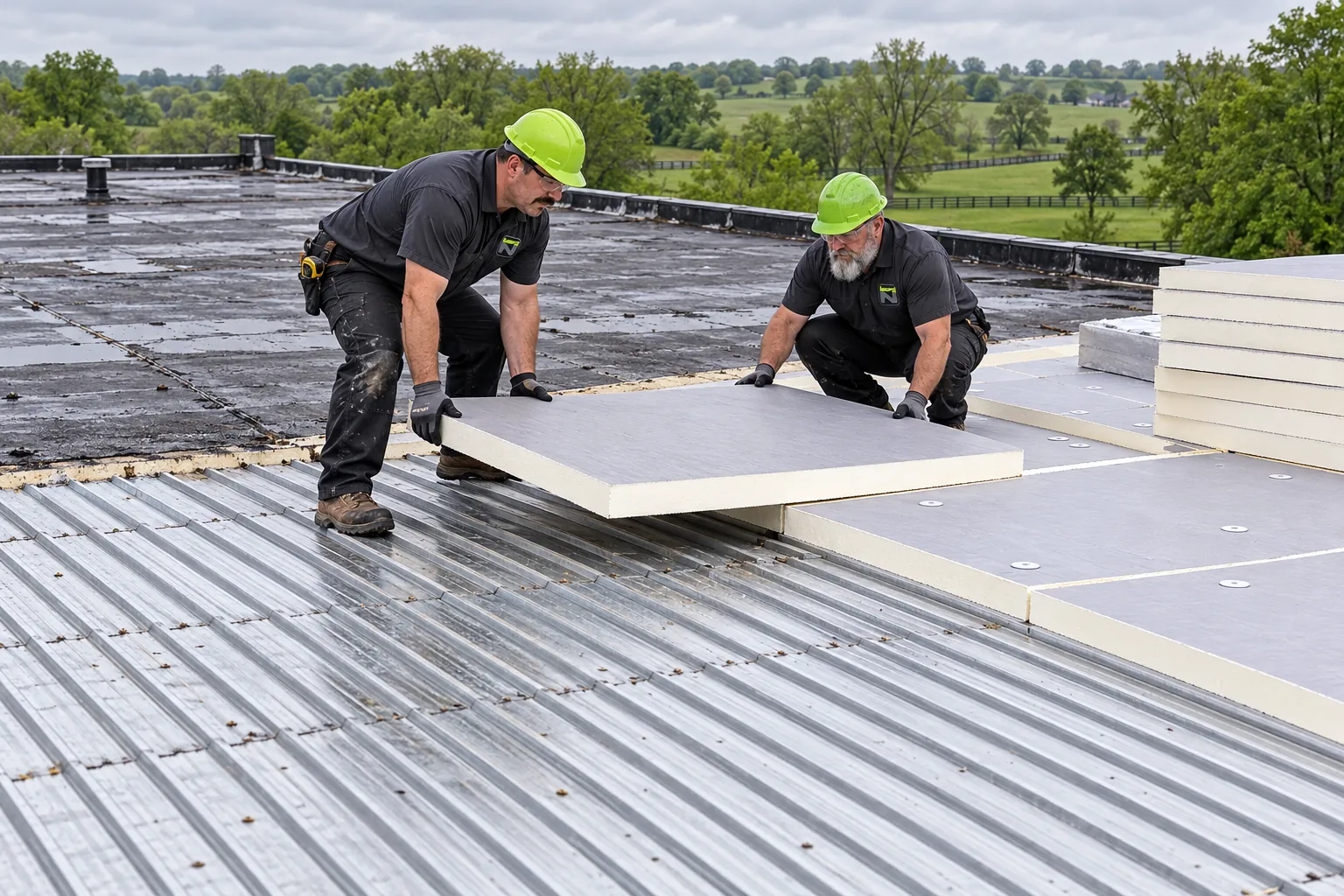
Tapered insulation and reset drains for a low-slope roof that holds water after rain.
Flat roofing in Nicholasville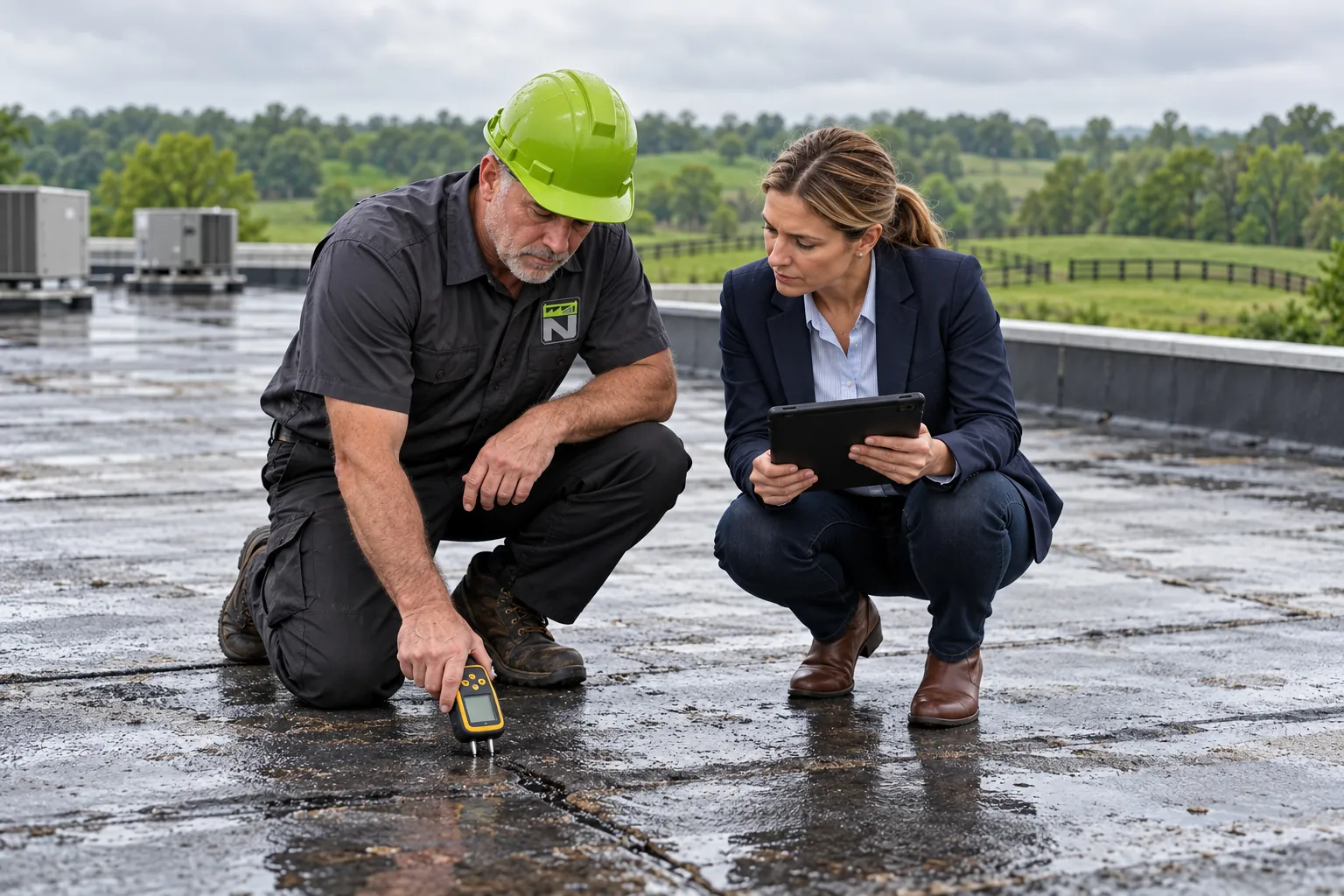
Retaping a lifted lap or replacing a cracked pipe boot on a rubber roof with years left.
Commercial roof repair in NicholasvilleEPDM suits low-slope roofs where cold-weather flexibility and wide panels help. Good matches include older flat roofs replaced with matching rubber, office and school roofs with few rooftop units, additions tied into an existing rubber roof, and canopies over walkways. The sheet is black in most cases, with white available.
Cooling decides it. Black EPDM absorbs heat, sheds snow and frost faster, and costs less, while white EPDM keeps the surface cooler and shows dirt. Over air-conditioned offices and retail, white earns its added cost; unheated storage and heated shops do fine under black.
Rubber stays flexible near zero, so it bends with the deck through freeze and thaw rather than cracking. Hail resistance comes from the whole assembly: a thicker sheet and a high-density cover board do most of the work, tapered insulation keeps ponds from forming, and adhered sheets with secured edge metal handle wind.
Primer and factory seam tape seal each lap. The crew cleans both surfaces, primes the bonding area and lets it flash off, lays the tape, presses the upper sheet down, and rolls the seam. Where three sheets meet, a cover patch seals the T-joint. Taped seams have largely replaced older liquid splice adhesive.
Yes, as a recover, when the old insulation is dry and the building carries only one roof layer. New insulation or cover board goes over the old surface, rubber is fastened or adhered on top, raised edge metal covers the extra height, and every curb, pipe, and drain gets new flashing. Wet boards or two layers mean tear-off.
On the roof, with core cuts and a moisture check that show whether the job is a recover or a tear-off. From there the scope lists sheet color and thickness, the attachment method, insulation, and every boot, curb, and drain that needs new flashing.
Tell us about the rubber roof and where it leaks. We start with core cuts, a lap-by-lap check, and a written EPDM scope.
Or call (270) 249-6474
Want a call back about your roof?
Leave a name and number, or call (270) 249-6474 now.